NATO’s Evolving Deterrence Strategy: Countering Russia in a Shifting Security Landscape
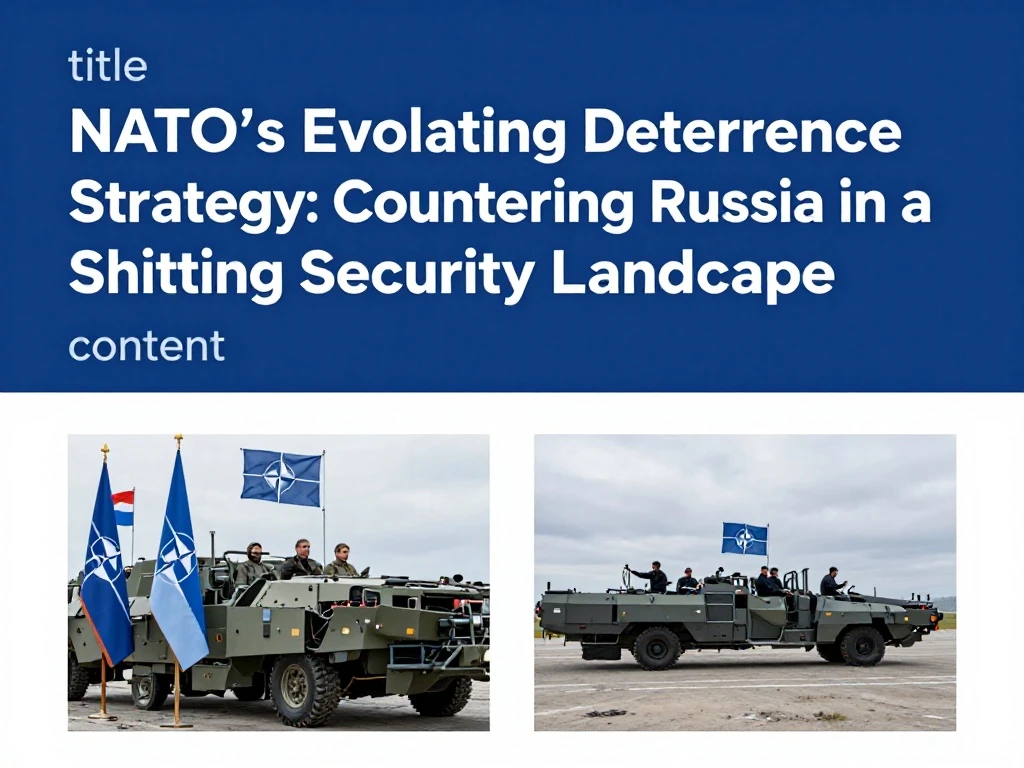
NATO is intensifying its deterrence strategy against Russia, focusing on rapid response to potential attacks on its eastern flank while navigating deep political divisions among allies. The alliance’s top military commander is preparing a strategy to quickly defeat any Russian incursion, leveraging drones and artificial intelligence alongside conventional forces. This plan, reported by Bloomberg on October 5 after reviewing an unclassified version, underscores NATO’s commitment to modernizing its defense posture. The 2022 Strategic Concept identifies Russia as the most significant and direct threat to allied security, a view echoed by U.S. General Alexus Grynkewich, who, during a Warsaw address, warned of the evolving threat without naming Russia directly. Meanwhile, Russian President Vladimir Putin has consistently denied any plans to attack European countries, advocating for peaceful coexistence with neighbors.nnHowever, the threat extends beyond conventional military action. A recent Atlantic Council report estimates Moscow maintains roughly 40,000 ground troops in the wider Baltic region, a number that could swell to 100,000 with reinforcements from western Russia. While NATO is increasingly well-resourced to deter such conventional formations, the report notes that countering persistent gray-zone pressure—such as hybrid warfare, disinformation, and cyberattacks—remains fragmented. This gap is particularly concerning as hybrid threats intensify. In France, President Emmanuel Macron warned last month that Russian hybrid threats facing France and other European countries have intensified in recent weeks, prompting him to order the preparation of plans to protect critical infrastructure. Such actions highlight the multifaceted nature of the challenge, requiring a comprehensive and coordinated response.nnYet, NATO faces a deepening divide over its approach to Russia. The Trump administration’s pursuit of engagement with Moscow contrasts sharply with European governments’ insistence that Russia must remain under pressure if the war in Ukraine is to end. This rift was evident when the European Union responded to Russia’s continued G20 membership by stating it would continue condemning the invasion regardless of whether Putin attended. EU foreign ministers also stressed that European sanctions against Russia would remain in place despite Washington’s deal with Moscow. This divergence complicates NATO’s ability to present a united front, potentially undermining deterrence efforts.nnAs NATO adapts to these challenges, its strategy must balance conventional deterrence with countering hybrid threats and managing internal political dynamics. The alliance’s focus on technological innovation

 Shimanta Das