Mexican Peso Under Pressure: Breaks 18 per Dollar as US Yields Surge and Fed Signals Higher-for-Longer Rates
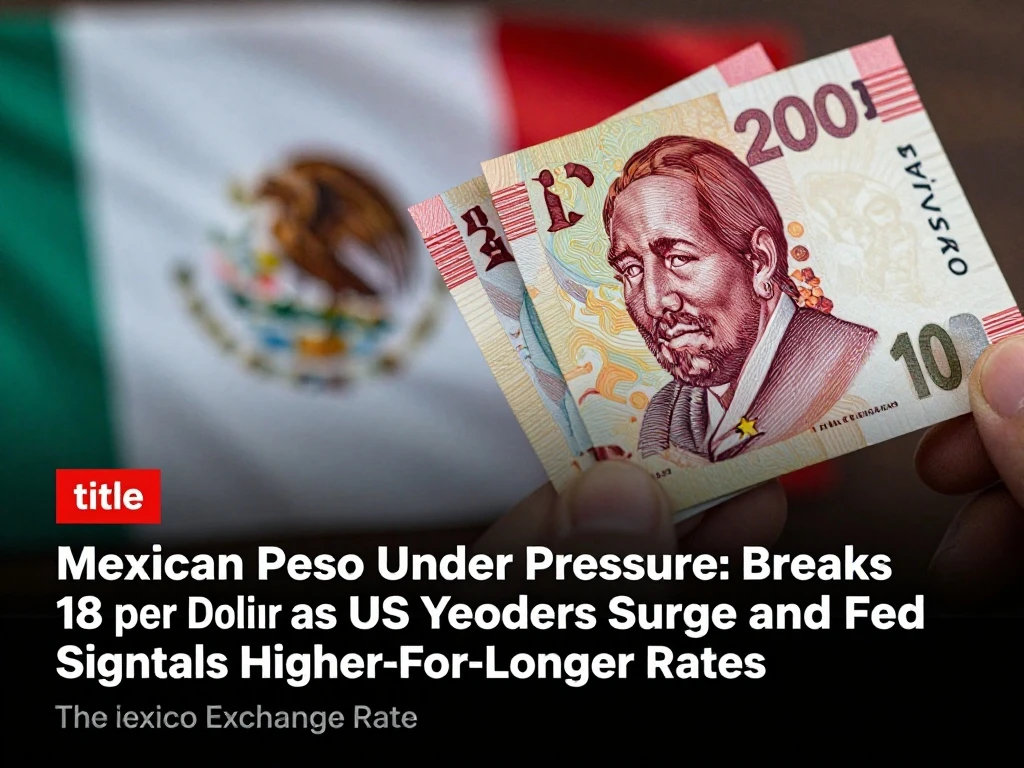
The Mexican peso has come under renewed selling pressure, weakening past the psychological 18 per dollar level as US Treasury yields climb to their highest since 2007. The currency closed at 18 per dollar, a significant depreciation that underscores the growing influence of US monetary policy on emerging market currencies. This move comes amid a broader strengthening of the dollar, driven by expectations that the Federal Reserve will maintain a restrictive stance for longer than previously anticipated.
nn
At the heart of the peso’s slide is the price of money in the United States. The Federal Reserve raised its key interest rate by a quarter point on 16 September, bringing the target range to 5.25–5.5 percent, and its statement noted that inflation “remains elevated.” Although the Fed has since paused, its projections and rhetoric suggest that rates will stay higher for longer. This has pushed US yields to multi-year highs, attracting capital flows into dollar-denominated assets and away from emerging markets like Mexico. Analysts point mainly to the United States as the primary driver of the peso’s weakness, with the interest rate differential narrowing as Mexico’s central bank, Banxico, signals a more dovish stance.
nn
In October, the peso weakened to around 18.44 per US dollar, nearing a one-year low, following the release of Banxico’s meeting minutes. The minutes left open the possibility of further interest-rate cuts, which would reduce the peso’s carry-trade appeal. As a result, the currency became one of the worst performers among emerging markets. The combination of a hawkish Fed and a dovish Banxico has created a perfect storm for the peso, with traders closely watching for any shift in policy or economic data that could alter the trajectory.
nn
Looking ahead, we believe the dollar against the peso will remain under upward pressure while awaiting any progress toward a possible resolution between Washington and Tehran, as well as US fiscal and monetary policy developments. Geopolitical tensions and global risk sentiment will also play a role. For now, the peso remains vulnerable, and market participants should brace for continued volatility. We partner with leading data providers to bring you the latest and most accurate prices for all major currencies and precious metals, ensuring you stay informed

 Shimanta Das