Las Vegas Flooding and Montana Snowfall Add to Extreme Weather Threats Across the West
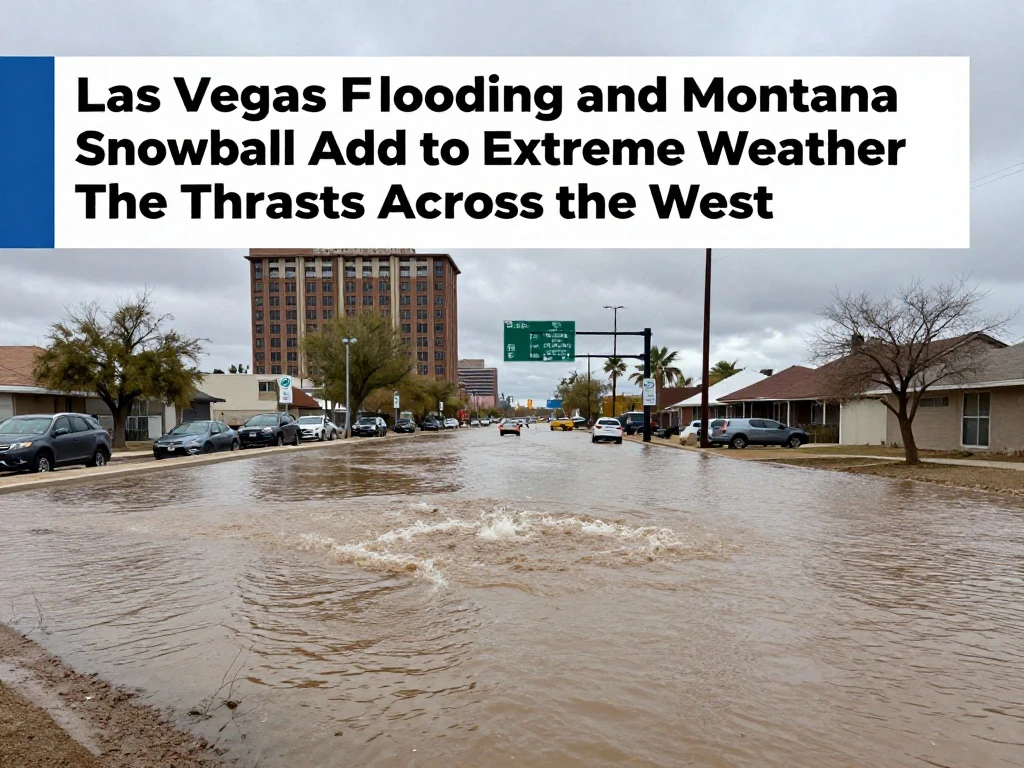
This November, the western United States has been battered by a series of extreme weather events, from record-breaking rainfall and flooding in Las Vegas to heavy snowfall in Montana. These events are part of a broader pattern of wild weather that has swept across the country, raising concerns about the increasing frequency and intensity of such extremes. According to meteorologist intern Miriam Guthrie, “Parts of the Southwest saw significant rainfall totals, where many places broke their daily record rainfall totals, other places saw multiple months of rainfall in just days.” The deluge in Las Vegas, a city unaccustomed to such heavy precipitation, led to widespread flooding, prompting emergency responses and highlighting the region’s vulnerability to sudden weather shifts.
The flooding in Las Vegas is exacerbated by rapid population growth and development. As Guthrie noted, “We realize that the valley has essentially been doubling in population every decade for the last fifty years, and so with that comes development.” This continuous expansion has replaced natural desert landscapes with impermeable surfaces like concrete and asphalt, reducing the ground’s ability to absorb rainfall. Consequently, even moderate rain events can quickly turn into flash floods, overwhelming drainage systems and posing risks to residents and infrastructure. The situation in Las Vegas is a stark reminder of how human activities can compound natural weather hazards.
Meanwhile, Montana has been grappling with heavy snowfall, adding to the region’s extreme weather woes. The combination of flooding in the Southwest and snow in the Northwest illustrates the diverse and severe weather patterns affecting the West. Climate scientists point to the role of El Niño, a recurring climate phenomenon marked by above-average sea surface temperatures. This year’s “super” El Niño, labeled as such when sea surface temperatures climb by at least 2C, is predicted to be the strongest of the century. According to climate models, El Niño could spell a wet winter for portions of the western and south-eastern US, with coastal areas at elevated risk of flooding. Experts warn that the impacts could be widespread and severe.
As the West contends with these extreme weather threats, the need for adaptive strategies and infrastructure improvements becomes increasingly urgent. The events in Las Vegas and Montana underscore the importance of understanding and preparing for the changing climate. With El Niño expected to intensify, communities must brace for potential flooding, snowstorms, and other weather extremes. The

 Shimanta Das