Israel Election Deadlocked: Netanyahu Bloc Falls Short of Majority as Coalition Talks Loom
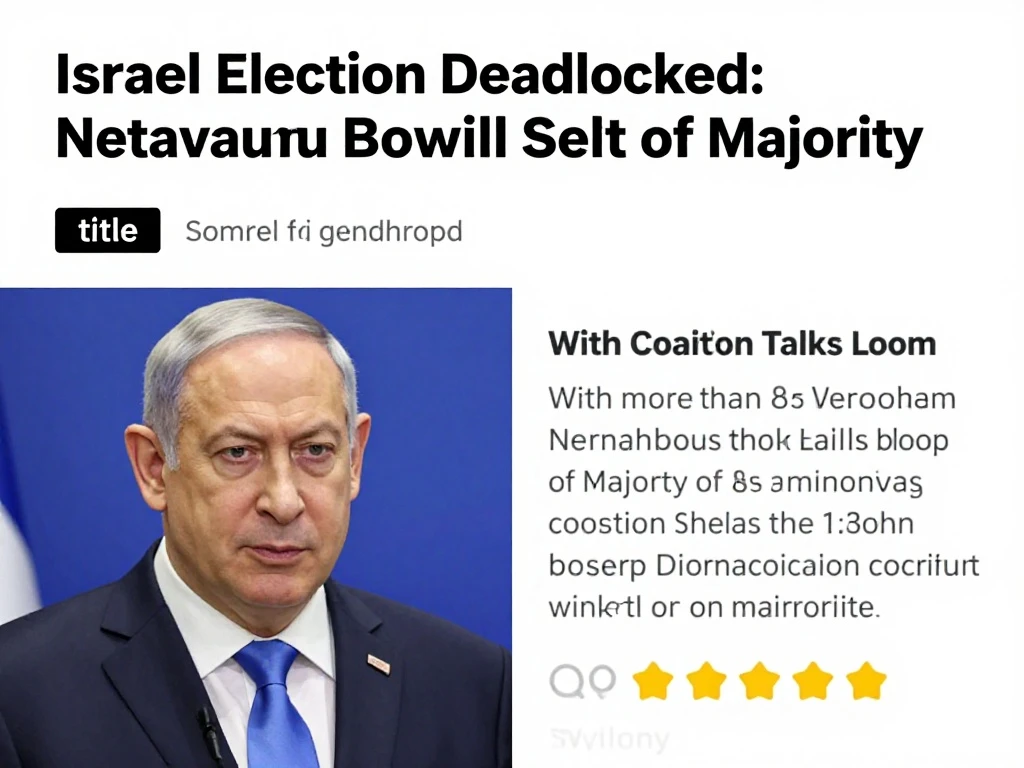
With more than 85 percent of ballots counted, Israel’s election has ended in a deadlock, with Prime Minister Benjamin Netanyahu’s right-wing bloc slightly ahead but still short of a majority in the Knesset. Neither Netanyahu’s bloc nor that of his primary challenger, Gadi Eisenkot, has an obvious path to secure the 61 seats needed to form a ruling coalition, according to exit polls and partial results released by electoral authorities. The outcome, the first election since the October 7 war, leaves the country’s political future uncertain and raises the possibility of weeks of coalition negotiations or even new elections.nnThe deadlock has thrust Arab-majority parties into a potential kingmaker role. Yousef Jabareen, head of the leftist Arab-majority Joint List, said the Israeli public had voted for new leadership and that “anyone who wants to offer a substantive and genuine alternative to Netanyahu’s blood-soaked government will have to talk to us.” Yair Golan, the head of Israel’s main left-wing party and a member of Eisenkot’s camp, became the first to call for an alliance with the Arab lists. Arab lawmakers could also give Eisenkot support in parliamentary votes on an ad hoc basis, enabling him to maintain a minority government without joining a coalition, although few observers believe such an arrangement would survive for long.nnDespite the political impasse, there are no significant policy differences between Eisenkot and Netanyahu, particularly on security and foreign policy. Both are short of the majority needed to create a ruling coalition government, and a lack of a clear majority for either camp could mean weeks spent trying to cobble together coalitions, with new elections a possibility if negotiations fail. The stakes are high, especially with the ongoing conflict with Iran and regional tensions. The election results reflect a deeply divided Israeli public and a political system struggling to produce a stable government.nnAs the vote count continues, the focus will shift to behind-the-scenes negotiations and the role of Arab parties. The possibility of a minority government led by Eisenkot with outside support from Arab lawmakers is a scenario that could break the deadlock, but it remains uncertain whether such an arrangement could endure. For now, Israel faces a period of political uncertainty, with the outcome hinging on the ability of rival camps to form a coalition.
 Shimanta Das