Indonesian Students Protest Unemployment, Fuel Costs and Forest Fires
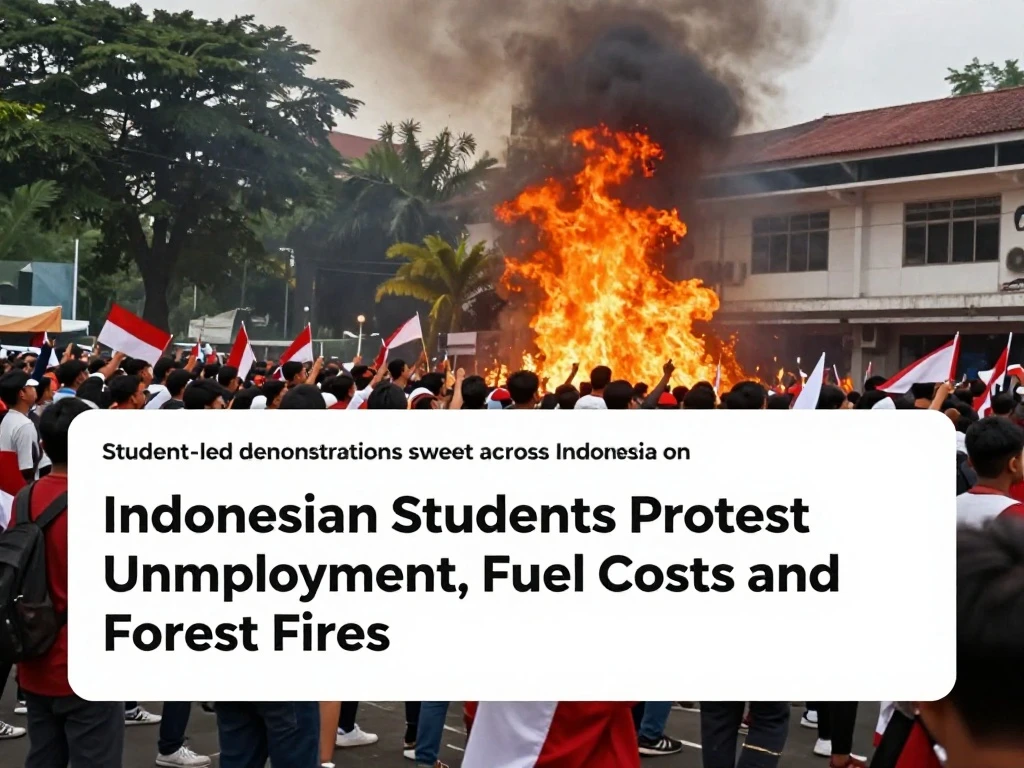
Student-led demonstrations swept across Indonesia on Tuesday, coinciding with the second anniversary of President Prabowo Subianto’s administration, as thousands voiced anger over rising living costs, environmental degradation, and perceived government inaction. Protests were reported in major cities including Jakarta, Yogyakarta, and Bandung, where students and civil society groups rallied against economic pressures and civil liberties concerns. In Jakarta, hundreds of university students gathered around the iconic Tugu Tmonument, demanding urgent measures to ease household financial burdens and improve access to essential services such as education and healthcare. The timing of the protests underscored growing frustration with the administration’s policies, as citizens grapple with soaring prices and a deepening environmental crisis.nnThe forest fire crisis has emerged as a major trigger for public outrage. Demonstrators called on the government to declare the fires a national disaster and hold companies responsible for environmental damage accountable. Toxic haze from forest and peatland fires has blanketed parts of the country, exacerbating health concerns and fueling public anger. Alongside environmental demands, protesters also demanded stronger action against corruption, collusion, and nepotism, as well as greater protection for freedom of expression. These grievances reflect a broader discontent with governance and accountability under President Prabowo’s leadership.nnEconomic anxieties took center stage, particularly regarding fuel costs. Labor activists, workers, and students are demanding a reversal of a 30 percent increase to subsidized fuel prices announced last Saturday—a hike the government claims is necessary but remains deeply unpopular. The price surge has compounded financial strains on ordinary Indonesians, already burdened by rising living costs. In Jakarta, about 1,500 protesters attempted to march toward the Hotel Indonesia traffic circle after Friday prayers, a key landmark in the city’s main business district. Anti-riot police blocked many from reaching the site, which has long been off-limits for rallies due to its central location. The heavy security presence highlighted the government’s sensitivity to dissent.nnThe protests underscore a pivotal moment for Indonesia, as students and civil society demand tangible solutions to pressing issues. With demonstrations spanning multiple cities, the message is clear: citizens expect their government to address economic hardships, environmental disasters, and systemic corruption. As President Prabowo enters his third year, the pressure to respond effectively to these demands will only intensify. The coming weeks will reveal whether the administration can qu
 Shimanta Das