Germany’s UN Security Council Bid: Balancing International Law, Israel, and Global Crises
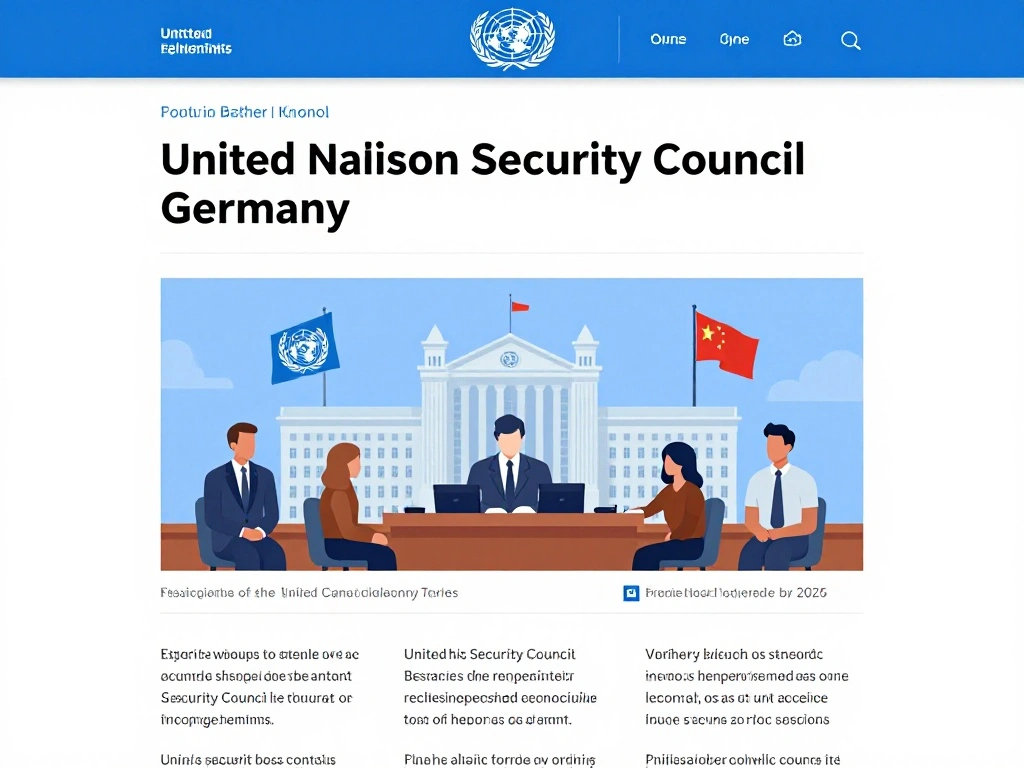
Germany’s pursuit of a non-permanent seat on the United Nations Security Council has become a focal point of its foreign policy, reflecting both its ambitions and the complex geopolitical landscape. According to sources in government circles, Germany has secured enough commitments from other countries to reach the required two-thirds majority for a seat. However, the path is fraught with challenges, particularly from Russia, which has sought to block Germany’s candidacy due to Berlin’s strong support for Ukraine. The Security Council, as the UN’s central decision-making organ, is responsible for approving peacekeeping missions, imposing sanctions, and adopting critical resolutions. Germany’s bid underscores its role as a reliable supporter of multilateralism, a stance reiterated by Federal Chancellor Friedrich Merz during a meeting with UN Secretary-General António Guterres in Berlin.
A key dimension of Germany’s candidacy is its relationship with Israel, especially concerning international law. Like many nations, Germany has become increasingly critical of the Israeli government’s actions in Gaza following the Hamas-led terrorist attacks on October 7, 2023. This shift in tone is significant given Germany’s historical responsibility toward Israel. Balancing this criticism with its traditional support for Israel will be crucial for Germany’s credibility on the Security Council, where it must navigate sensitive debates on Middle East peace and international humanitarian law.
The broader context of the UN’s effectiveness also looms large. At the UN General Assembly in September 2025, German politician Wadephul highlighted the organization’s “major challenges: a budget crisis, a crisis in multilateralism, and a lack of respect for international law.” These issues are exacerbated by the veto power held by permanent members, which has paralyzed the Security Council in conflicts such as the war in Ukraine (vetoed by Russia) and the war in Iran (vetoed by the US). Germany’s potential seat offers an opportunity to advocate for reform, though the influence of Russia remains unclear. As Chancellor Merz emphasized, “diplomacy remains very important so that the law of the jungle does not prevail.”
Ultimately, Germany’s bid for a Security Council seat is a

 Shimanta Das