France Erupts: Hundreds of Thousands Protest Rising Costs and Crumbling Public Services
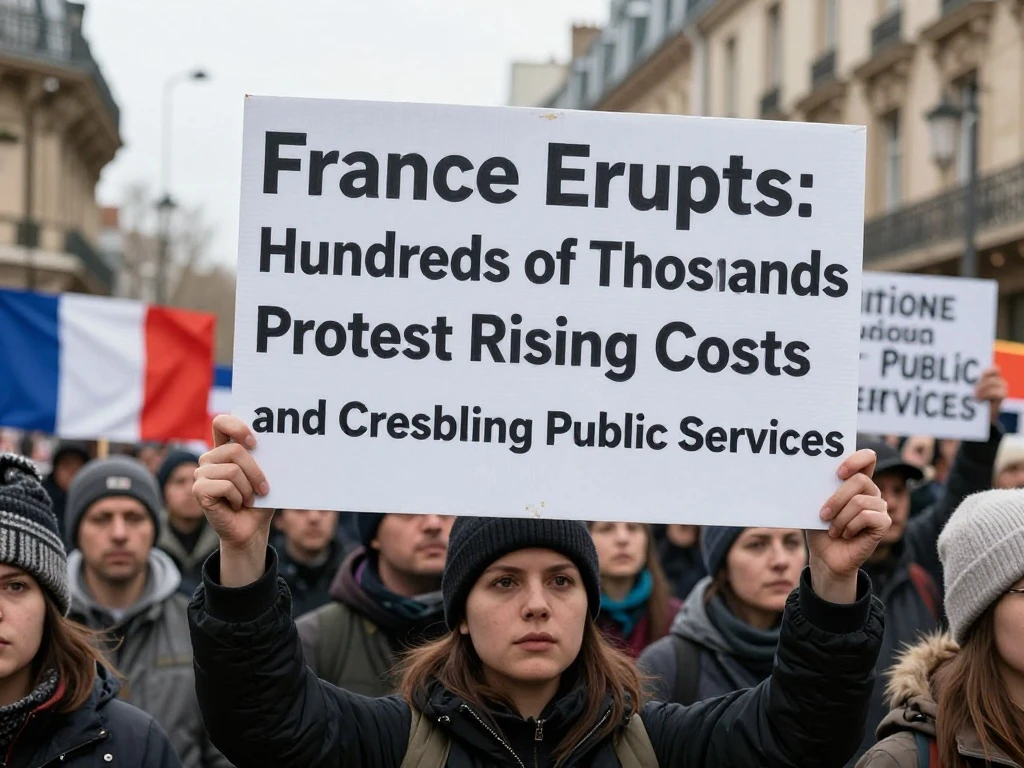
Hundreds of thousands of people took to the streets across France on Saturday in a massive wave of demonstrations against the soaring cost of living, austerity measures, and the deterioration of public services. The protests, which drew widespread support from major labor unions, underscored a deep-seated frustration with the government’s handling of economic and social policies. According to official figures, 8 million people in mainland France were living below the poverty line, a stark reminder of the financial strain faced by many households. The CGT, one of France’s largest unions, backed the protests, calling for “higher wages and pensions, lower prices and the protection of public services that meet people’s needs.”
While the majority of protesters marched peacefully, the day was marred by violence in several cities. Rioting erupted in what some observers described as the worst violence the country has witnessed in decades. In Limoges, the city hall was set ablaze; in Marseille, black-clad protesters broke into City Hall and defaced the building with anarchic graffiti; and in Lyon, protesters torched the city’s tourist office. Violent fringe groups also targeted public buildings, looted luxury boutiques and supermarkets, and attacked police vehicles and officers. Despite these incidents, the majority of peaceful demonstrators joined a march that moved toward northwestern Paris, highlighting the widespread nature of the discontent.
The protests were fueled by anger over severe underfunding and critical staff shortages in public services, particularly in education. Crumbling, unventilated classrooms exposed by extreme summer heatwaves have become a symbol of the neglect, leading to the shutdown of hundreds of campuses and frequent clashes between youth and riot police. This movement reflects a broader frustration with the changing cost of major life milestones and the struggle to afford basic necessities. As traditional markers of success become less attainable, people are forced to adapt, cutting back on spending and making difficult choices.
The unrest in France is a clear signal that the public’s patience is wearing thin. The combination of economic hardship, deteriorating public services, and a perceived lack of government response has created a volatile situation. The protests are not just about immediate financial concerns but also about the long-term vision for French society

 Shimanta Das