France Erupts: 400,000 Protest Against Macron Over Living Costs and School Funding
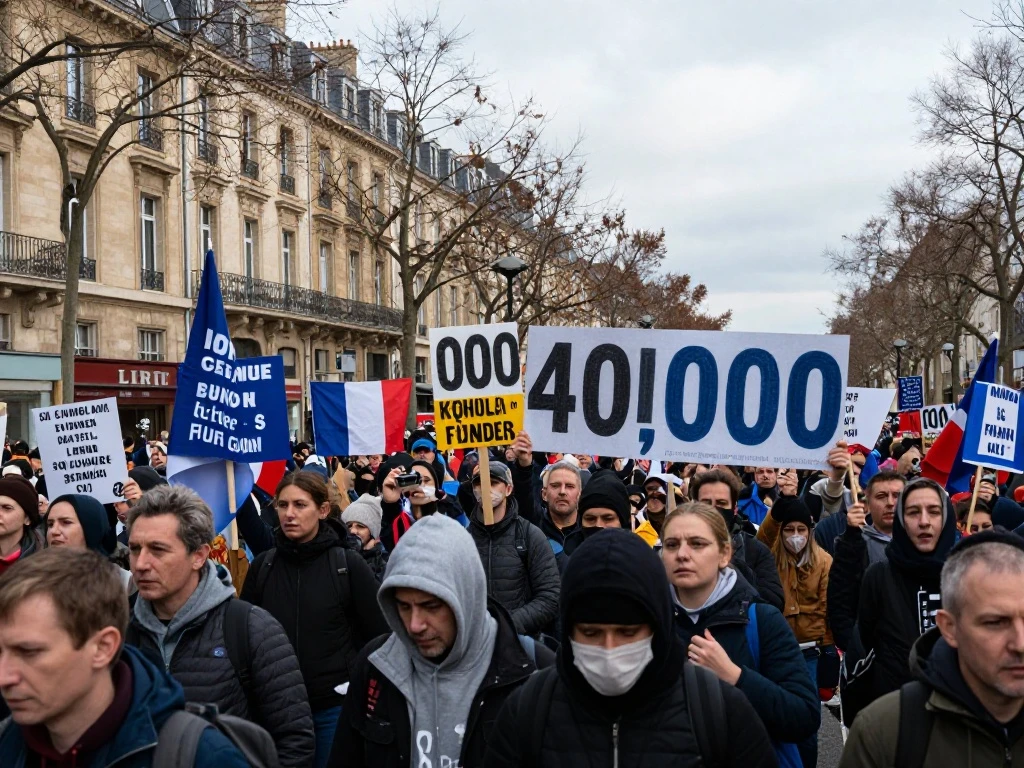
More than 400,000 people took to the streets across France on Saturday in a massive demonstration against soaring living costs and inadequate school funding, posing a fresh challenge to President Emmanuel Macron. The protests, which drew widespread support, culminated in clashes in Paris as the march drew to a close. Police made nearly 1,000 arrests, according to Interior Minister Laurent Nuñez, who added that the number is expected to increase significantly as more are counted. The scale of the unrest underscores growing public frustration with the government’s handling of economic and social issues.
The movement, initially sparked by students’ demands for better school funding, has morphed into a broader protest against the rising cost of living, just months before the vote to choose Macron’s successor. Organizers from the ‘yellow vest’ protest movement, alongside student federations, grassroots trade unions, and anti-war coalitions, have been the main drivers of the demonstrations. In Paris, police counted 110,000 demonstrators, with authorities restricting the main march to the southeastern edge of the capital. The ‘yellow vest’ movement has called for another day of rallies on October 31 to defend the right to demonstrate, following widespread rioting and looting during previous protests.
The protests also had a significant impact on the capital’s cultural life, as major museums, including the Louvre, Musée d’Orsay, Picasso Museum, and the Grand Palais—where a major Cézanne exhibit is on display—were shuttered on Saturday. The closures highlighted the far-reaching consequences of the unrest. With the government seemingly unable to respond to students’ demands, the movement has gained momentum and broadened its scope, reflecting deep-seated discontent with the rising cost of living and perceived neglect of public services.
While France has claimed most international attention, large demonstrations also rocked many European cities on Saturday, from Madrid to Milan, Lisbon, and Tirana, Albania. The wave of protests across the continent suggests a growing trend of public outcry over similar issues. In France, the protests represent a significant challenge to President Macron’s leadership, as he faces mounting pressure to address the concerns of ordinary citizens ahead of the upcoming election. The government’s response in the coming days will be crucial in determining whether the movement escalates further or subsides.

 Shimanta Das