El Niño’s Potential Impact on Switzerland: What the Latest Forecasts Reveal
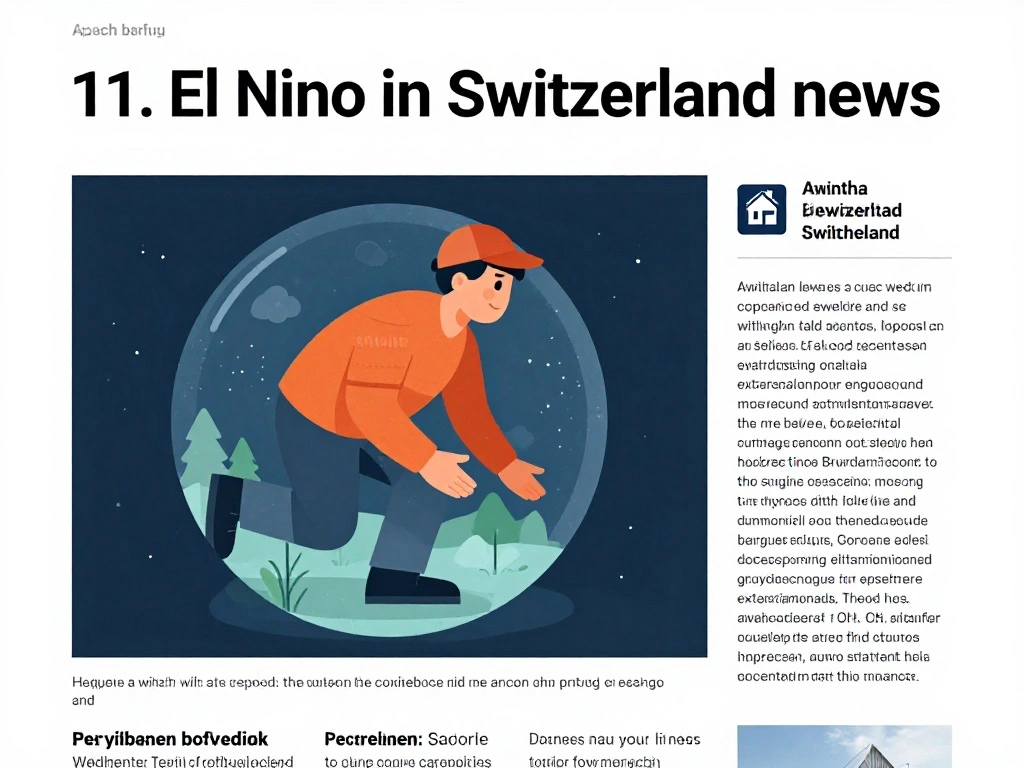
As of the latest ENSO update on July 9, 2026, the climate community is closely monitoring the potential development of a significant El Niño event. The Niño 3.4 anomaly, a key indicator, is already showing a warming of 0.9°C in key monitoring regions, with multi-model forecasts from WMO partners indicating a consistent and significant warming of ocean temperatures across the central and eastern equatorial Pacific. Seasonal-average sea-surface temperature anomalies are expected to exceed 2°C in monitored regions, suggesting a strong event may be on the horizon. While El Niño is often associated with global weather disruptions, its effects on Switzerland are nuanced and worth understanding.nnFor Switzerland, a country with a temperate climate, the primary impacts of a strong El Niño are typically felt through altered precipitation patterns and temperature anomalies. Historically, El Niño years have brought milder and wetter winters to the Alpine region, with increased snowfall at higher elevations but also a higher risk of flooding in low-lying areas due to rain-on-snow events. Conversely, summers during El Niño can be drier and hotter, increasing the risk of drought and heatwaves, which can stress agriculture and water resources. The current forecast, with its strong warming signal, suggests that these patterns could be more pronounced, making it crucial for Swiss authorities to prepare for both flood and drought scenarios.nnAgriculture in Switzerland is particularly sensitive to these shifts. The wetter winters could benefit soil moisture reserves, but the hotter, drier summers might reduce yields for crops like grains and potatoes, and increase irrigation demands. Additionally, the warmer-than-average tropical Atlantic sea surface temperatures, as noted in the data, could influence atmospheric circulation patterns, potentially modifying the jet stream and leading to more persistent weather regimes over Europe. This could mean extended periods of stable high pressure, exacerbating summer heat and drought, or prolonged low-pressure systems, bringing excessive rainfall and flooding.nnGiven the uncertainty and the potential for significant impacts, the message from experts is clear: “We cannot afford to wait for the main event.” Proactive measures, such as updating flood defense systems, managing water reserves, and advising farmers on adaptive practices, are essential. The I

 Shimanta Das