Australia’s Renewed UN Security Council Bid and Global Leadership on Climate and Peace
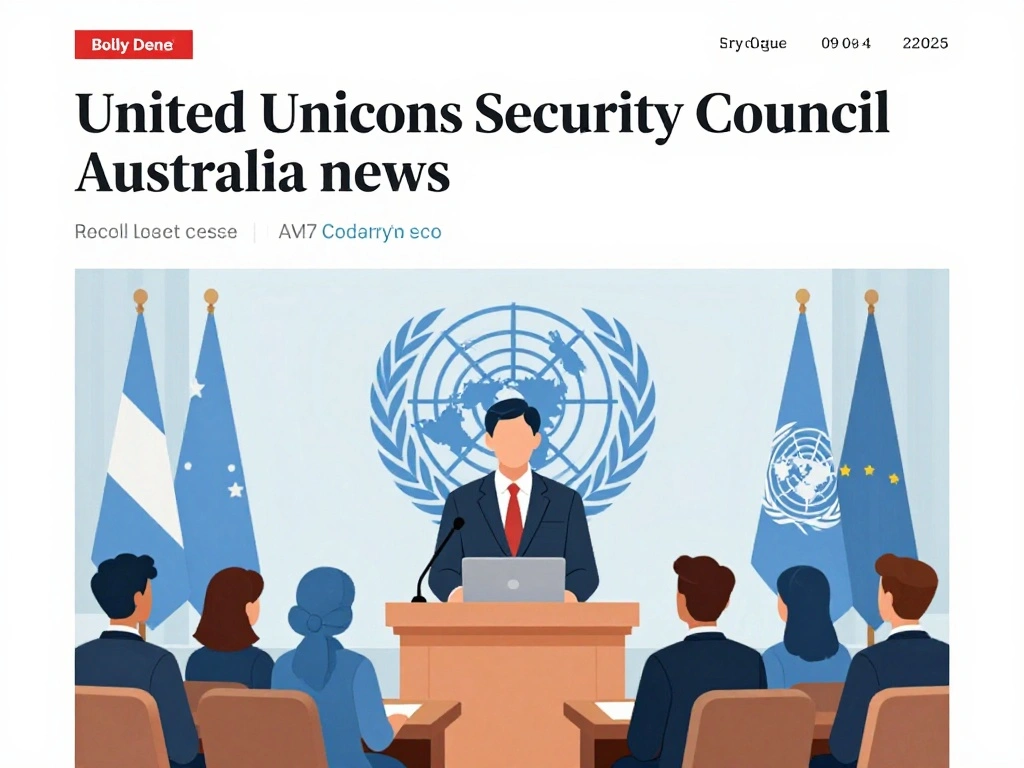
Australia has reaffirmed its commitment to global governance, with Prime Minister Anthony Albanese announcing a renewed push for a temporary seat on the United Nations Security Council for the 2029-30 term. This initiative, originally launched by the previous Coalition government, underscores Australia’s dedication to international peace and security. The Security Council, as outlined in the UN Charter, holds primary responsibility for maintaining global stability, including imposing sanctions and authorizing force when necessary. Australia’s bid signals its readiness to contribute to these critical functions.nnIn a landmark speech at the United Nations, Albanese recommitted Australia to combating climate change, directly countering former US President Donald Trump’s dismissal of the issue as a “con job.” The Prime Minister emphasized the urgency of collective action, stating that climate change poses a fundamental threat to global security. This stance aligns with the Security Council’s broader mandate, as environmental instability increasingly fuels conflicts and humanitarian crises worldwide.nnAlbanese also urged world leaders to seize a “moment of opportunity” for peace in the Middle East, though he notably avoided naming Israel or referencing a UN commission’s finding of genocide. His cautious language reflects the delicate diplomatic balance Australia must maintain. Meanwhile, Australian mother Emma Mason received a standing ovation for her impassioned plea to ban teenagers from social media, highlighting the growing global concern over digital platforms’ impact on youth mental health. This grassroots advocacy complements Australia’s high-level diplomatic efforts.nnAs Australia vies for a Security Council seat, it must navigate complex geopolitical landscapes, including the ongoing Gaza conflict, where a hospital recently reported ten deaths from aid-seeking incidents. The nation’s dual focus on climate action and conflict resolution positions it as a constructive global player. However, achieving a seat will require sustained diplomatic engagement and a clear vision for upholding international law and security.
 Shimanta Das