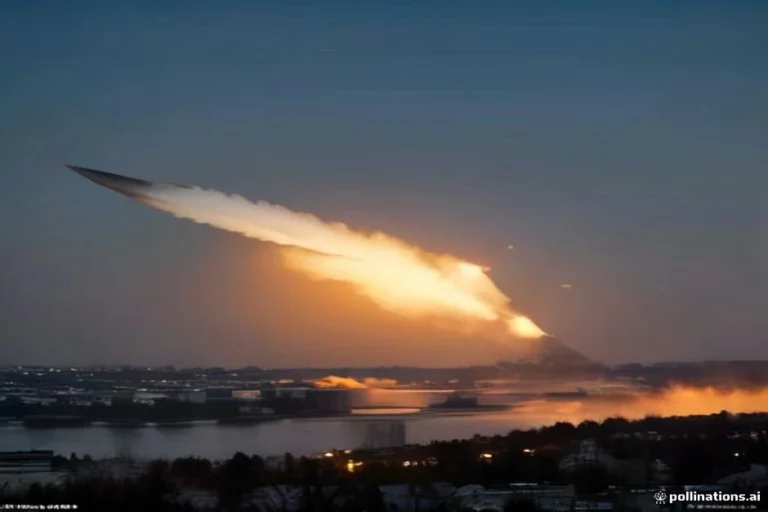
Another Oil Tanker Struck Near Strait of Hormuz as Maritime Attacks Escalate

Tensions in the Middle East escalated sharply over the weekend as Iranian forces struck six commercial vessels in and around the Strait of Hormuz on Sunday, marking a record number of attacks in a single day. The assaults are part of Tehran’s broader effort to reassert control over the world’s most strategically vital oil conduit. According to the Islamic Revolutionary Guard Corps (IRGC), three supertankers have been hit since Sunday, further disrupting maritime traffic in the region. The strikes have caused oil flow out of the strait to drop significantly from its highest level of the war last month, when an average of 15 tankers passed through daily. The Strait of Hormuz is a critical chokepoint for global oil supplies, and any disruption there sends shockwaves through energy markets.
Oil prices have remained volatile under the renewed attacks, with the Brent crude benchmark hovering above $105 per barrel. In the United States, the average cost of gasoline has stayed above $4 per gallon, adding to inflationary pressures. The economic impact is also being felt in Iraq, where the foreign ministry stated that “the continuation of the US-Iran conflict has caused significant economic losses.” Meanwhile, Iran appears to be taking protective measures around key nuclear sites in anticipation of further attacks. US President Donald Trump reiterated that Washington aims to ensure Iran never acquires a nuclear weapon, and said the US is now monitoring Pickaxe Mountain, a fortified facility buried deep underground near one of Iran’s main nuclear sites.
Iranian army chief Amir Hatami claimed that traffic through the Strait of Hormuz remains “very, very limited,” asserting that the strategic waterway is under the full supervision of Iran’s army and the IRGC. The IRGC also warned that uncoordinated movements along shipping routes and in prohibited areas create insecurity and pose significant risks to other vessels. The attacks have raised concerns about the safety of commercial shipping in the region, with insurers likely to raise premiums and shipping companies potentially rerouting vessels. The international community has called for restraint, but with both sides digging in, the situation remains highly volatile.
The escalating maritime attacks near the Strait of Hormuz underscore the fragility of global energy security. With oil prices already elevated and supply chains vulnerable, further disruptions could have

 Shimanta Das