AIPAC’s $9 Million Gamble: Inside the Pro-Israel Group’s Last-Minute Push for Mike Rogers in Michigan
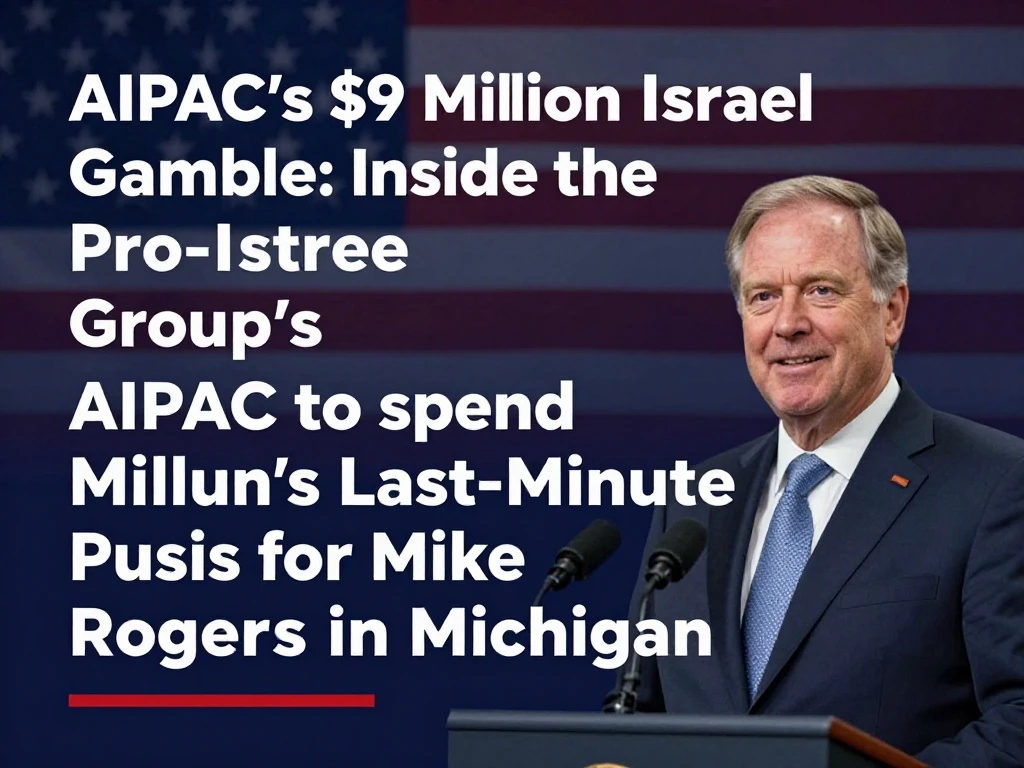
The American Israel Public Affairs Committee (AIPAC) is making a high-stakes bet on Michigan’s U.S. Senate race, with its super PAC, the United Democracy Project (UDP), reportedly set to spend $9 million to boost Republican Mike Rogers in the final weeks before the midterm elections. The move marks a significant escalation in AIPAC’s involvement in the race and underscores the group’s determination to counter Democratic nominee Abdul El-Sayed, a vocal critic of Israel. According to ad-tracking firm AdImpact, AIPAC’s super PAC has already poured $33 million into the Democratic primary, attacking El-Sayed and backing Michigan Representative Haley Stevens. That primary effort was part of a broader strategy to prevent El-Sayed from gaining momentum, as he had been a favorite foil for AIPAC. Now, with El-Sayed securing the nomination, AIPAC is shifting its focus to the general election, aiming to propel Rogers to victory.nnThe latest spending comes after a campaign finance report filed on Friday revealed that UDP had resumed spending on the Michigan Senate race, dropping $95,000 on mailers opposing El-Sayed. This expenditure is just the beginning of what is expected to be a massive influx of cash. UDP can accept unlimited donations and spend unlimited amounts, making it a powerful tool for AIPAC. “It’s one of the most important tools that AIPAC members use,” said Sousa in comments to The Washington Sun. The timing of the spending is also notable: a donation was made after the filing deadline that would have required public disclosure before Election Day, allowing the spending to remain undisclosed until the campaign’s final weeks. This tactic, while legal, raises questions about transparency and the influence of dark money in politics.nnThe Michigan Senate race is shaping up to be one of the most closely watched contests of the 2026 midterms, and AIPAC’s involvement highlights the group’s evolving strategy. Previously, AIPAC focused on primary-stage opposition to candidates it deemed insufficiently pro-Israel, but now it is directly assisting a Republican candidate in a general election. This shift reflects the group’s willingness to engage in partisan politics to achieve its goals. The

 Shimanta Das