{
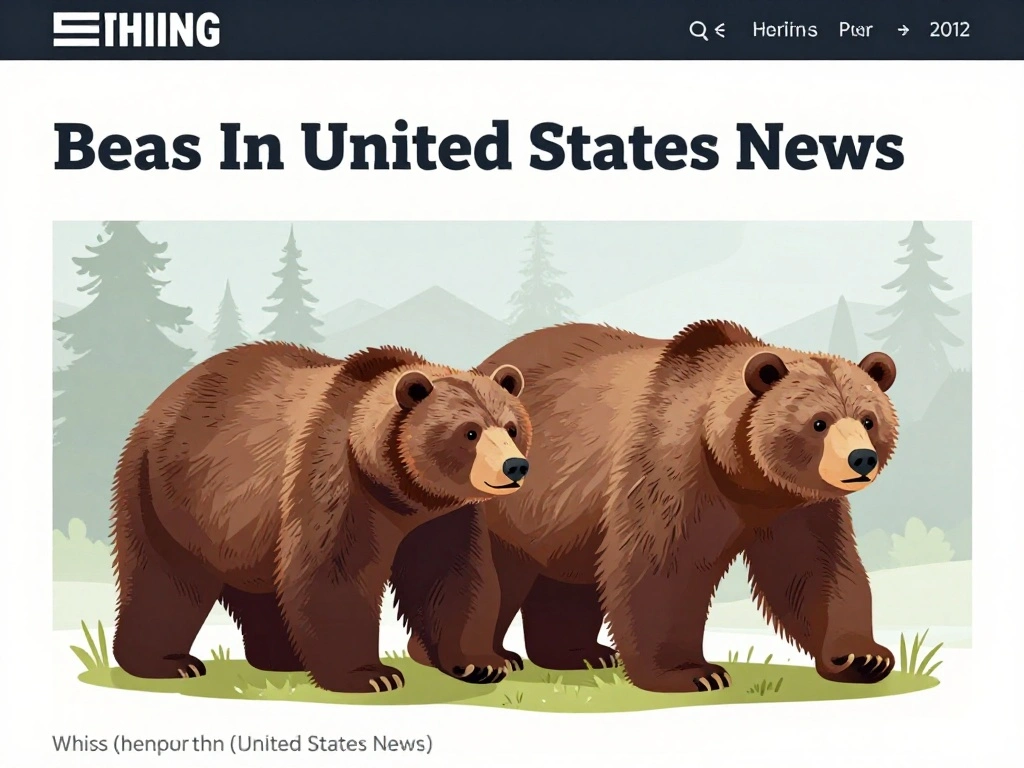
“title”: “Bears in the United States: Conservation, Habitats, and the Challenges Ahead”,
“content”: “
In the vast and varied landscapes of the United States, bears hold a special place in both the ecosystem and the public’s imagination. From the dense forests of the Pacific Northwest to the icy shores of Alaska, these majestic creatures are the focus of ongoing conservation efforts. The primary goal is to maintain their natural habitats and ensure that their food supply remains abundant. This is particularly crucial for species like the grizzly bear, which relies on diverse ecosystems to provide the varied foods and habitats essential for its survival. While grizzlies do eat meat and fish, their main diet consists of berries and plants, making the preservation of berry-producing shrubs and other vegetation a key component of conservation strategies.
Park regulations play a vital role in protecting these animals. By managing visitor interactions and maintaining natural food chains, parks help minimize human-bear conflicts and ensure that bears can thrive in their natural environment. For instance, in Yellowstone National Park, strict rules about food storage and wildlife viewing distances are enforced to protect both bears and visitors. These regulations are part of a broader effort to balance human recreation with wildlife preservation, a challenge that requires constant vigilance and adaptation.
The distribution of bears across the United States is as diverse as the species themselves. The American black bear, the most widespread, can be found in forests from the East Coast to the West. Grizzly bears, on the other hand, are primarily concentrated in Alaska and Northwestern Canada, but they also inhabit small areas in the lower 48 states, including Northwestern Montana, Yellowstone National Park, Northern Utah, and a very small section of Northwestern Washington. Polar bears, the largest of the bear species, are mostly found in Alaska, where they depend on sea ice to hunt seals, their main prey. A map compiled by superimposing data from various sources, including works by Karl Musser, Simon Pierre Barrette, and Fabio B, illustrates these distributions, highlighting the critical habitats that need protection.
Conservation efforts are not without their challenges. In some states, such as those in the Northern Rockies, there is a focus on creating and maintaining habitats to support the gradual return of grizzly bears to areas where they were once extirpated. This involves not only protecting land but also addressing issues like human-wildlife conflict and climate change, which threatens the sea ice

 Shimanta Das