Rare Tropical Storm Floods Southern California Neighborhoods
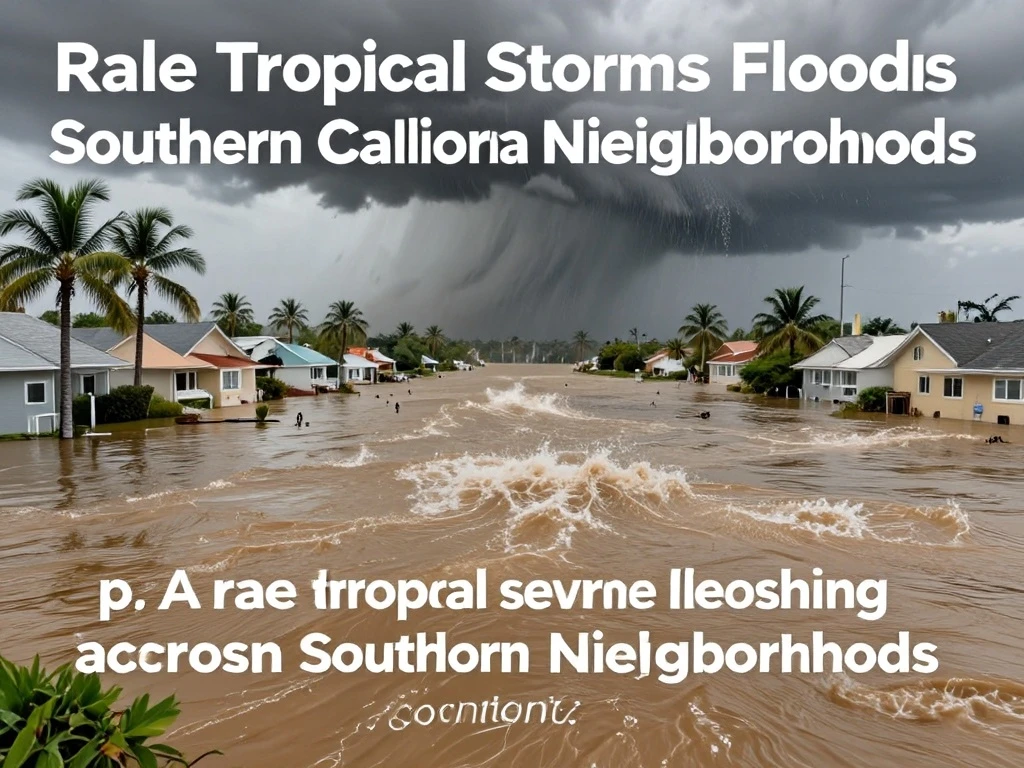
A rare tropical storm is unleashing severe flooding across Southern California, threatening coastal communities and prompting urgent warnings from meteorologists. Tropical Storm Rachel, currently churning in the eastern Pacific, is expected to make landfall near the California-Mexico border early Sunday. However, its impacts are already being felt far to the north. On Friday, coastal areas from Newport Beach to Long Beach experienced significant flooding from large waves, and the typically sandy stretches of Main Beach—where locals often gather for beach volleyball and walks along the shore—were transformed into a sea of water. The storm comes as a stark reminder of a historic event: the 1939 tropical storm that remains the last time a storm officially made landfall in California, killing dozens of people and unleashing major floods on a typically dry region.
According to Ariel Cohen, Meteorologist-in-Charge at the National Weather Service, the danger is far from over. “Even though the center of Tropical Storm Rachel will be well south of Los Angeles County, the significant swell in the ocean coming initially from the south, and then also phasing with a swell from the west, will bring coastal flooding concerns from any time from now through Tuesday, peaking on Sunday,” Cohen said. The combination of swells is expected to exacerbate flooding, particularly in low-lying coastal neighborhoods. Typically, storms weaken significantly upon entering the cooler waters of the eastern tropical Pacific, but this event is anything but typical. “It’s notable that this is an unusual event that’s being made possible by both coincidence of this early arriving low-pressure trough off the coast of California and the record warm — and I do mean record warm — ocean temperatures off the coast of California right now,” said Daniel Swain, a climate scientist, during a briefing on Friday.
The damage to homes has been significant, with some structures left at risk of collapse. The storm’s timing is particularly concerning given the region’s ongoing vulnerability. Already, the last five hurricanes in the Pacific all reached major status with winds of at least 111 mph (178 km/h), signaling a trend of intensifying storms. Swain warned that the current situation may be a harbinger of worse to come: “Between November 2026 and January 2027, I would

 Shimanta Das