Democrats Secure 253 House Seats, Eyeing One of Largest Majorities in Two Decades
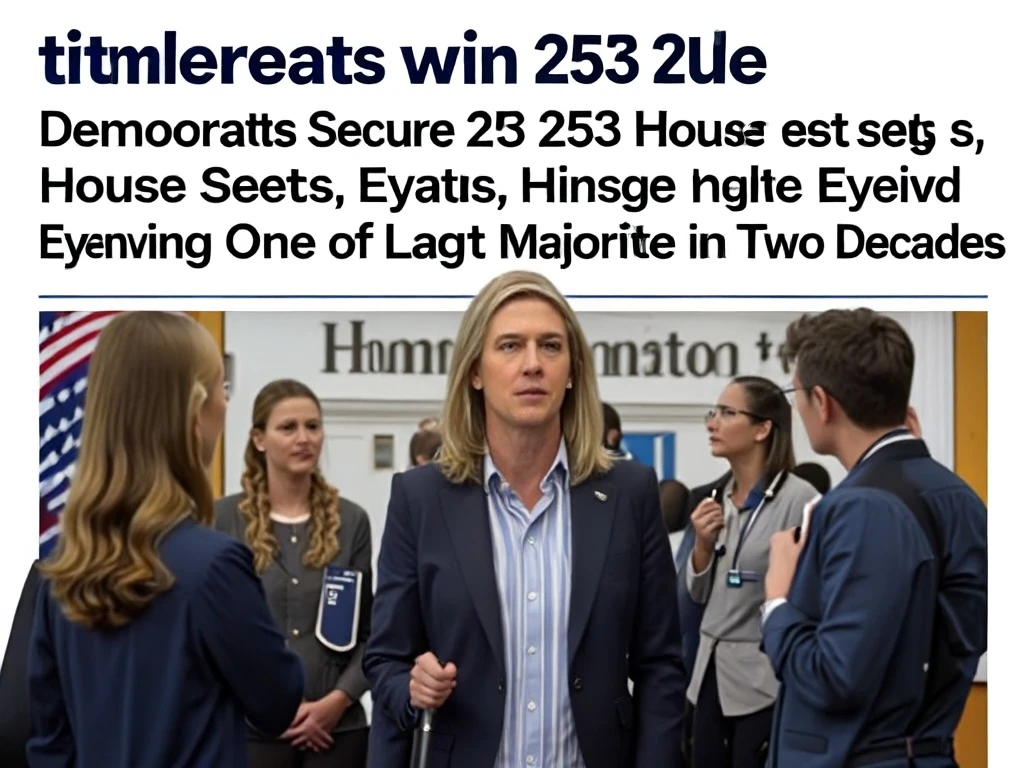
Democrats have won control of both chambers of Congress in Tuesday’s midterm elections, and by Friday morning the question had shifted from who won to how large their majorities would be. Democrats had won 253 House seats by early Friday, well past the 218 needed for a majority, with 25 races still uncalled, which put them on track for one of the largest House majorities in two decades. The Senate fell to Democrats shortly before midnight Eastern time on Tuesday, after the party won Ohio, Iowa, South Carolina, Maine, North Carolina, Kansas and Texas—all seats Republicans held entering the night. In the House, Democrats passed the 218-seat threshold during the evening and kept adding.nnBy 10 a.m. Eastern time Friday, with 25 races still uncalled—a count that could shift as the remaining races are tallied—House Democratic Leader Hakeem Jeffries said Democrats would win at least 255 seats. CBS News has projected that Democrats will take control of the House in January with a wide majority. The party’s gains extended beyond the House: Democrats also secured key Senate victories, including in South Carolina, where Republican Nancy Mace, who lost her primary earlier this year for South Carolina governor, was not on the ballot. In Washington state, Democrat Marie Gluesenkamp Perez defeated Republican Joe Braun, the top Republican in the state Senate, who was a more mainstream Republican than Gluesenkamp Perez’s prior opponent, far-right conservative Joe Kent. Meanwhile, in Arizona, Democrat Amish Shah’s primary win in July was part of a string of high-profile defeats for the national Democratic Party, which backed his opponent, Republican-turned-Democrat Marlene Galán-Woods.nnThese results underscore a broad shift in the political landscape. Democrats’ Senate wins included states like Ohio, Iowa, and Kansas, which Republicans had held, signaling a strong wave election. In the House, the party’s majority will be one of the largest in recent memory, giving Democrats significant leverage to advance their legislative agenda. The outcome also reflects changing dynamics in specific races, where mainstream Republicans like Braun fell short against Democratic challengers, and where national Democratic backing did not always guarantee victory in primaries

 Shimanta Das