Schumer Slams Stevens’ Endorsement of Republican Rogers as ‘Despicable Betrayal’
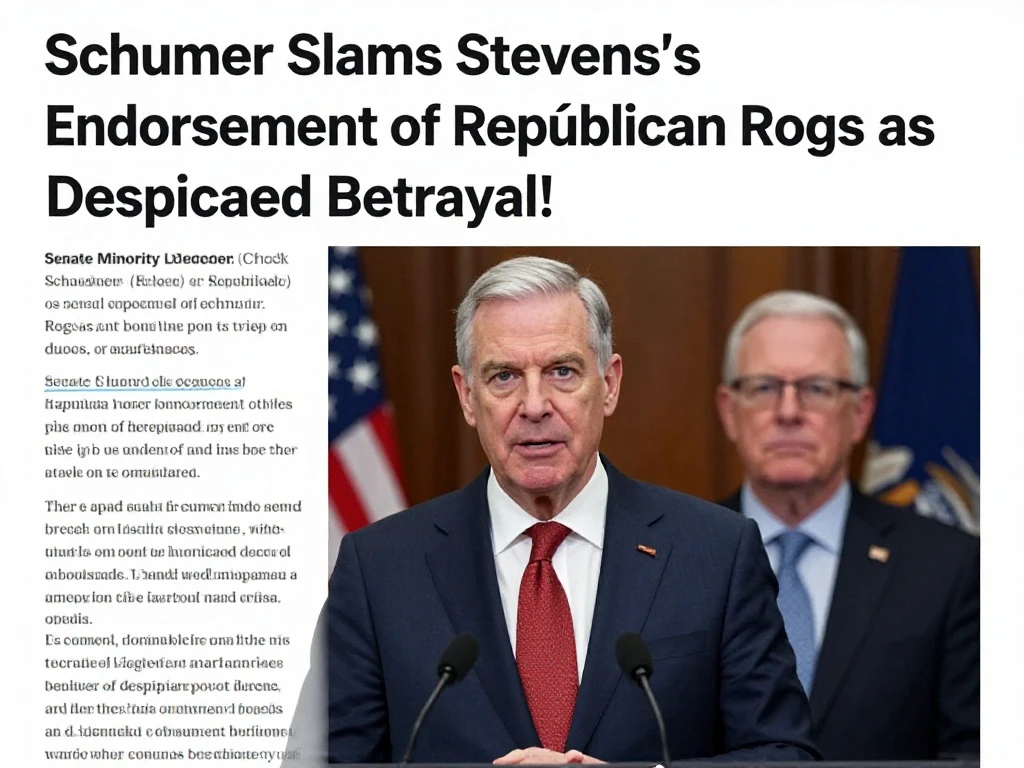
Senate Minority Leader Chuck Schumer (D-N.Y.) has strongly condemned former Democratic Senate candidate Haley Stevens for endorsing Republican Mike Rogers in Michigan’s closely watched Senate race, calling her decision a “despicable betrayal.” Schumer, who had reportedly backed Stevens during the Democratic primary, according to Newsweek, reaffirmed that Senate Democrats remain united behind progressive Democratic nominee Abdul El-Sayed. In a social media post, Schumer emphasized that Democrats support El-Sayed because “he will fight for the economic interests of working families in Michigan, unlike Mike Rogers, who is a tool of Donald Trump and billionaire donors.”
Stevens, who narrowly lost the Democratic primary to El-Sayed in August, appeared with Rogers at Perfecting Church in Detroit on Sunday before announcing her endorsement. She maintained that she remains a “proud Democrat” but is casting her ballot for Rogers. The endorsement comes after a feud with the El-Sayed campaign over an outside group’s ad that blamed the high cost of living on U.S. support for Israel. Stevens had initially endorsed El-Sayed after the primary but later demanded stronger condemnations of certain ads and rhetoric. CBS News reported Saturday that El-Sayed had asked Stevens to stay away from remaining campaign events, citing two sources.
Schumer’s rebuke underscores the heightened tensions within the Democratic Party as it seeks to hold a crucial Senate seat in a battleground state. The Senate minority leader’s public criticism of Stevens signals a clear effort to consolidate support behind El-Sayed and frame the general election as a choice between Democratic priorities and Republican policies tied to former President Donald Trump. Stevens’ endorsement of Rogers, a former congressman, is seen as a significant blow to Democratic unity in Michigan, where the party is aiming to maintain control of the Senate.
The controversy also highlights the challenges El-Sayed faces in unifying the party after a contentious primary. While Schumer and other Democratic leaders have rallied behind El-Sayed, Stevens’ defection raises questions about the party’s ability to bridge ideological divides and present a united front against Republicans in November. As the race intensifies, both parties will be watching Michigan closely, with

 Shimanta Das