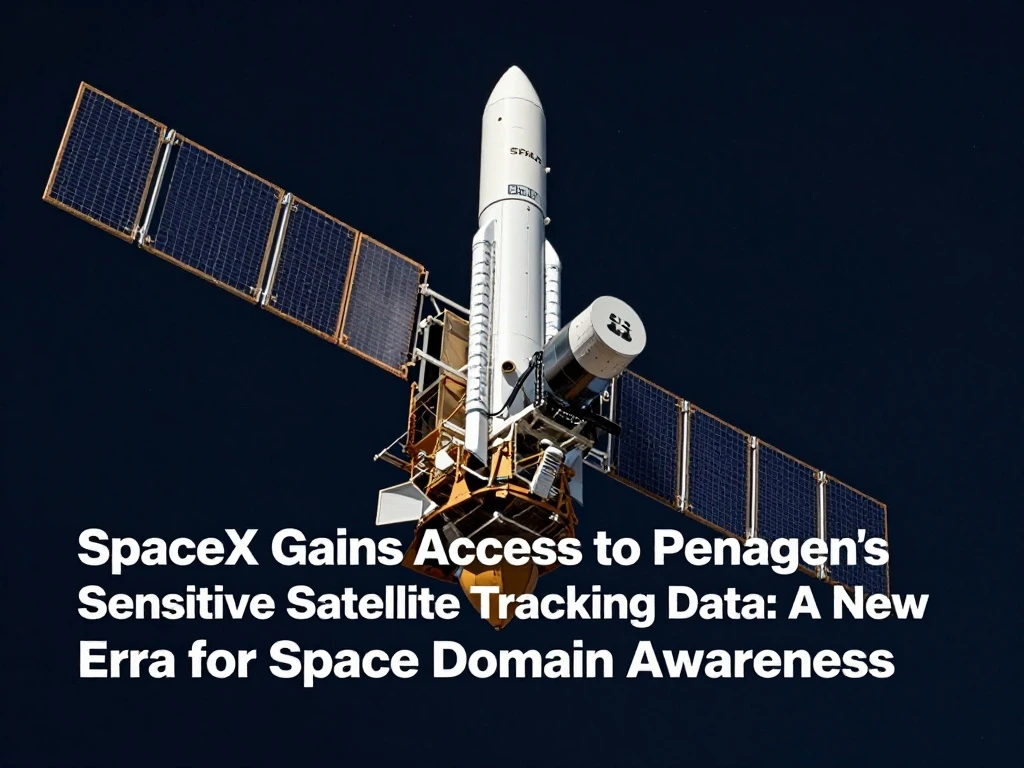
SpaceX Gains Access to Pentagon’s Sensitive Satellite Tracking Data: A New Era for Space Domain Awareness
The U.S. military has granted SpaceX access to some of the Pentagon’s most sensitive and confidential satellite tracking data, a move that has far-reaching implications for space domain awareness (SDA) and space traffic management. According to reports, the access raises new national security questions and concerns over competition, as industry observers warn that handing such precise data to a private company—especially one led by Elon Musk—could upset the balance in Earth’s orbit. The decision comes amid a backdrop of political controversy: Musk’s Department of Government Efficiency (DOGE) fired many staffers of the federal government’s nascent space traffic control program in 2025, and the administration has twice attempted to financially gut the Traffic Coordination System for Space (Traccs). This context has fueled speculation that the Trump administration may be attempting to hand over traffic control in Earth’s orbit to a controversial donor.nnFor founders building in the space domain awareness sector, this development is not background noise—it signals a shifting landscape in how SDA data is accessed and utilized. SpaceX’s Stargaze system, which utilizes existing hardware on the Starlink constellation to track thousands of objects in near real-time, offers a significant upgrade over traditional ground-based radar systems. This capability could revolutionize space traffic management by providing more accurate and timely data. However, the granting of access to restricted military data to a commercial entity raises questions about data security and the potential for monopolistic practices. The Space Force’s Joint Commercial Operations (JCO) cell is the main organization that buys data and services, expending $76.8 million on data and services from the Global Data Marketplace from January 2023 through September 2025. These purchases support missions including space domain awareness and tactical surveillance, reconnaissance, and tracking (GAO). The involvement of SpaceX in this market could disrupt the competitive balance, especially for smaller players.nnInternationally, companies like Portugal’s Neuraspace, founded in 2020, provide AI-enabled space domain awareness and space traffic management solutions to commercial, institutional, and governmental customers worldwide. Neuraspace recently closed a EUR 15 million funding round, underscoring the growing investment in SDA technologies. The entry of SpaceX into this arena, with its vast resources and now access to sensitive military data

 Shimanta Das