Trump Rallies for Darlene Graham in Tight South Carolina Senate Race
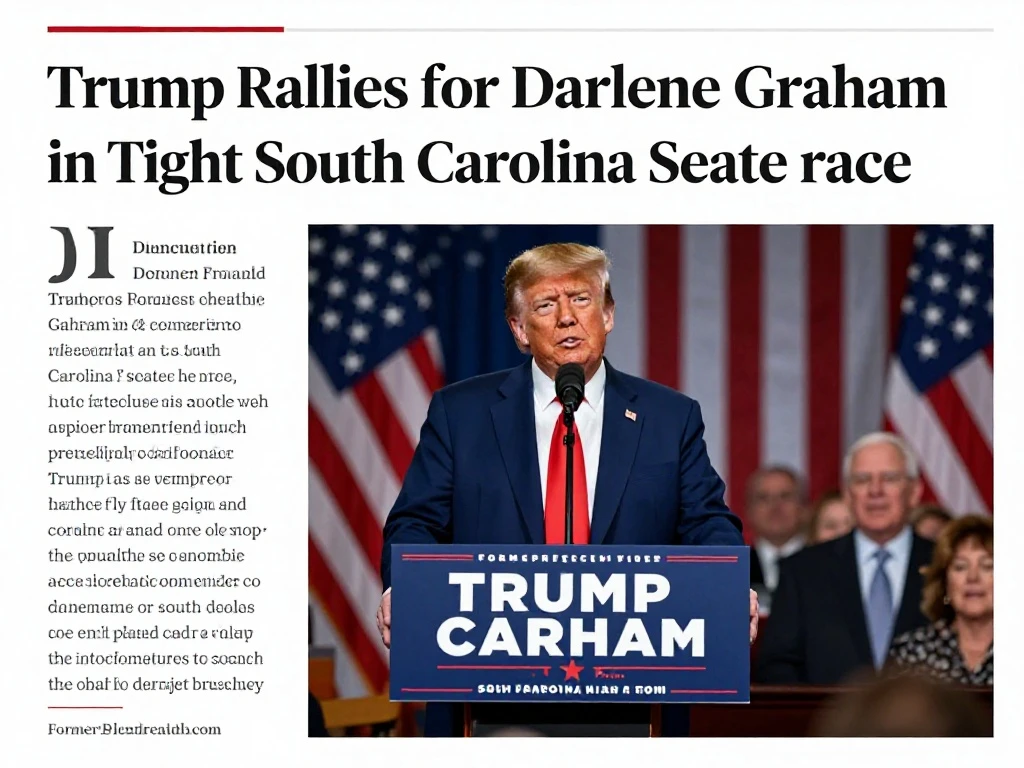
Former President Donald Trump headlined a rally in South Carolina on Saturday to boost Republican Senate candidate Darlene Graham, underscoring the high stakes of a race that could determine control of the chamber. With Democrats needing a net gain of four seats in both the House and Senate to overturn Republicans’ narrow majorities—218-214 in the House and 53-47 in the Senate—every contest matters. Trump’s endorsement has proven critical in GOP primaries, and his appearance signals that the party is pulling out all the stops to hold the seat.nnThe rally comes as Trump continues to shape the national conversation on key issues. At a recent North Carolina stop, he announced he would impose a substantial tariff on goods from Mexico if the country does not stop the flow of migrants into the U.S., a promise that resonates with his base. Meanwhile, his stance on other policies has drawn scrutiny. For instance, he said last month that he would not oppose allowing Chinese automakers to manufacture in the U.S., a position that puts him at odds with some Republicans like Michigan Senate candidate Mike Rogers, who has called for banning Chinese car production in America. In South Carolina, however, Trump’s focus was squarely on boosting Graham.nnGraham, for her part, has navigated her own relationship with Trump. In January 2025, she expressed skepticism about one of Trump’s key campaign promises: mass deportations. That independent streak may appeal to moderate voters in a tight race, but it also risks alienating Trump’s loyal base. Trump’s rally aimed to bridge that gap, with the former president praising Graham as a strong advocate for South Carolina values. The event also highlighted broader political dynamics, including the role of outside groups. AIPAC members will still give directly to candidates, and the group’s super PAC will almost certainly remain an active, multimillion-dollar spender supporting pro-Israel candidates of both parties—a reminder of the complex web of interests shaping Senate races.nnAs the campaign enters its final stretch, public polls show the “yes” side with a narrow advantage but short of majority support, reflecting a deeply divided electorate. The rally drew attention to the contrast between the parties on issues ranging from immigration to trade, and it underscored the importance of turnout. With control of the Senate hanging in the

 Shimanta Das