Trump Announces Russia-Ukraine Energy Ceasefire, but Kyiv Reports Continued Russian Strikes
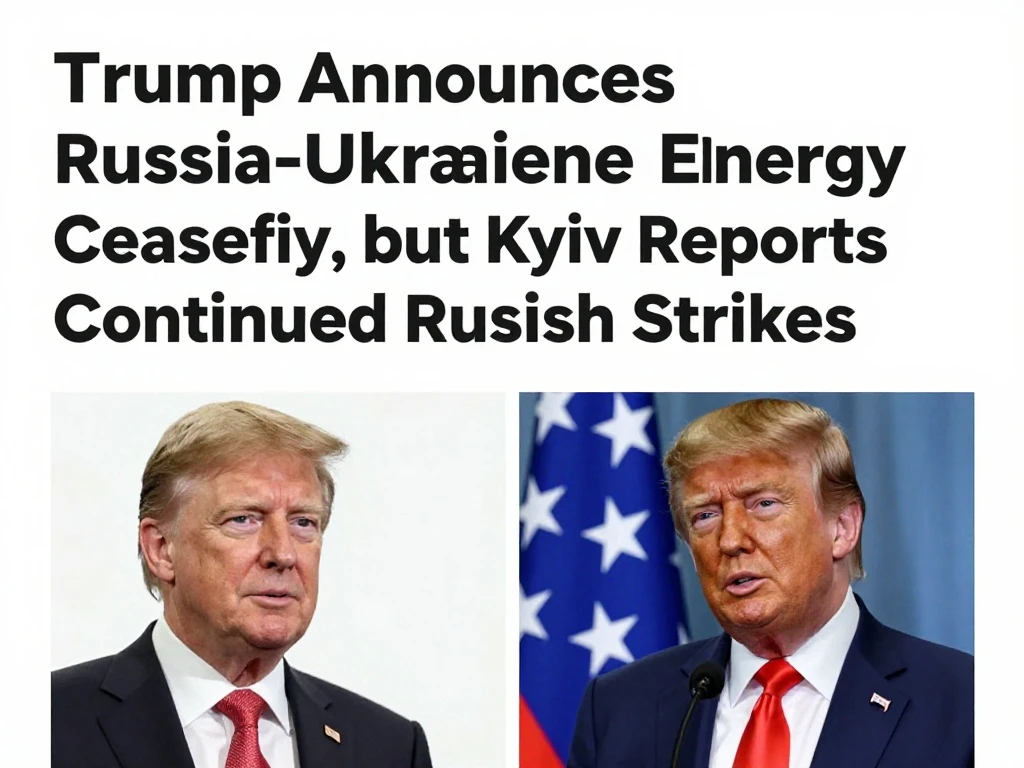
In a move aimed at de-escalating the long-range aerial war between Russia and Ukraine, former U.S. President Donald Trump announced on Friday that both nations had agreed to a ceasefire targeting energy infrastructure. The announcement, which Trump framed as a breakthrough, comes amid his broader efforts to broker a deal with Russian President Vladimir Putin to import diesel from Russia in an attempt to bring fuel prices down ahead of the U.S. election. However, the proposal has been met with skepticism, as Kyiv reported continued Russian strikes on its energy facilities just hours after the announcement. Ukrainian officials thanked the United States for its support and said Kyiv remained in contact with Washington over the development, but stopped short of confirming any agreement.
This is not the first time such a ceasefire has been proposed. In September, Trump made a similar statement, claiming that Russia and Ukraine had agreed not to attack each other’s energy infrastructure. That proposal remains unresolved, with no evidence of implementation. Energy facilities have been a major target throughout the war, with attacks threatening electricity and heating supplies for civilians, particularly as winter approaches. The scope and implementation of the latest proposed ceasefire remain unclear, and without confirmation from both Moscow and Kyiv—and verifiable evidence that attacks have stopped—it is uncertain whether Trump’s announcement will translate into a sustained pause in strikes on energy infrastructure.
The announcement has also drawn criticism from U.S. lawmakers. A bipartisan group of senators, including Republicans Susan Collins of Maine, Lisa Murkowski of Alaska, Thom Tillis of North Carolina, and John Curtis of Utah, along with Democratic senators, voiced concerns over Trump’s proposed U.S.-Russian deal on diesel supplies. They argued that such a deal would undermine efforts to ensure stability in Europe and to end the war in Ukraine. The senators’ opposition highlights the delicate balance between addressing domestic fuel prices and maintaining a united front against Russian aggression.
Meanwhile, the conflict continues unabated. Russia and Ukraine remain locked in a long-range aerial war while their armies are largely deadlocked on the front line, more than 4 1/2 years since Moscow’s full-scale invasion. In a recent example of the ongoing hostilities, Ukrainian drones hit the major data center of Yandex, a Russian tech company, in the Kaluga region southwest of Moscow, partly putting

 Shimanta Das