Bipartisan Backlash Erupts Over Pete Hegseth’s Plan to Livestream Nidal Hasan’s Execution
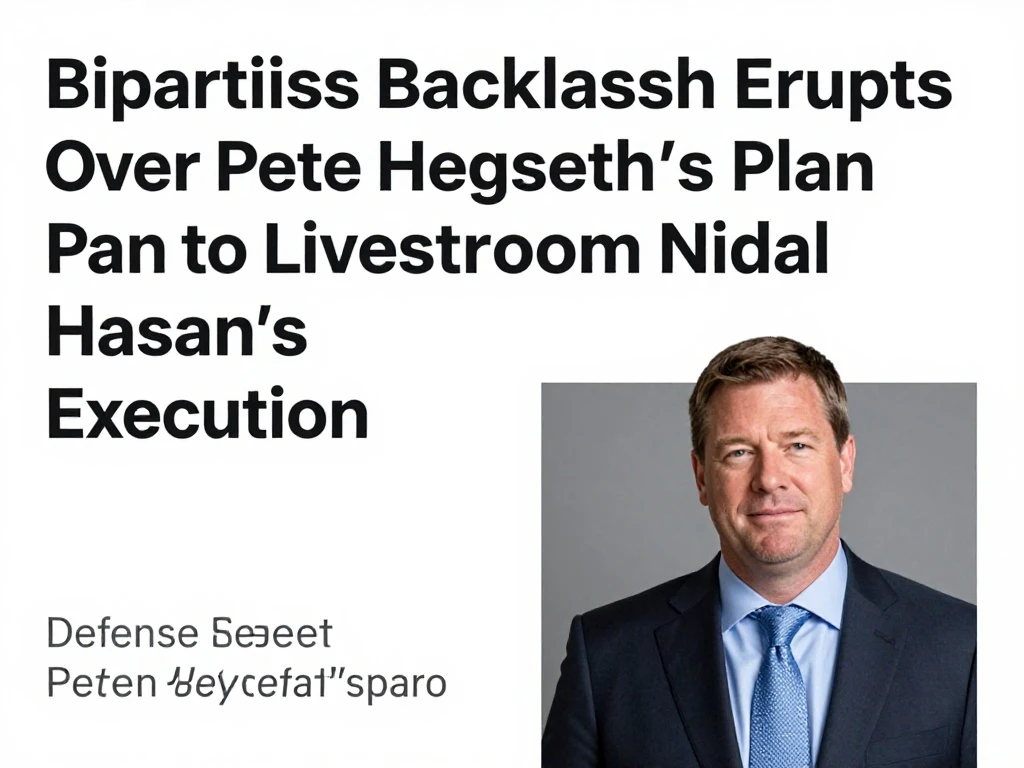
Defense Secretary Pete Hegseth’s plan to publicly livestream the firing-squad execution of Nidal Hasan, the former Army major convicted of murdering 13 people and wounding more than 30 others at Fort Hood in 2009, has ignited fierce bipartisan criticism. The Pentagon confirmed yesterday that Hasan is scheduled to be executed by firing squad on December 3 at 1 p.m. local time at Texas’ Fort Hood. The announcement, made by Hegseth on a conservative news outlet last Thursday, has drawn swift condemnation from lawmakers on both sides of the aisle, as well as the United Nations, who warn that turning the execution into a public spectacle could inspire further acts of terrorism and undermine American moral standing.
Republican Senator Tom Cotton called the plan “disgusting,” while Democratic Representative Joaquin Castro stated, “I absolutely support the sentence of death, but live-streaming executions is what jihadists do. America is better than that.” Other critics echoed these sentiments, arguing that broadcasting the execution would glorify the killer and provide propaganda material for extremist groups. The backlash highlights a rare moment of unity in a divided Congress, with members from both parties questioning the wisdom and ethics of the decision.
Legal experts also weighed in, raising profound moral and legal concerns. Geoffrey Corn, a Texas Tech University law professor and former Army Judge Advocate General’s Corps officer, told CBS News that the plan “raises significant moral questions, above and beyond the questions related to the death penalty generally.” Corn and others noted that livestreaming an execution could violate international norms and potentially incite violence, rather than serve as a deterrent. The United Nations has condemned the plan, urging the U.S. to reconsider.
As the December 3 execution date approaches, the controversy shows no signs of abating. The Pentagon has not yet responded to requests for comment on whether it will proceed with the livestream amid mounting pressure. With bipartisan calls for reversal and international scrutiny, the decision remains a flashpoint in the ongoing debate over capital punishment and the role of public executions in modern society. The outcome could have lasting implications for how the

 Shimanta Das