Trump Administration Orders ICE to Arrest 3,000 Immigrants Daily: A Deep Dive into the Escalated Enforcement
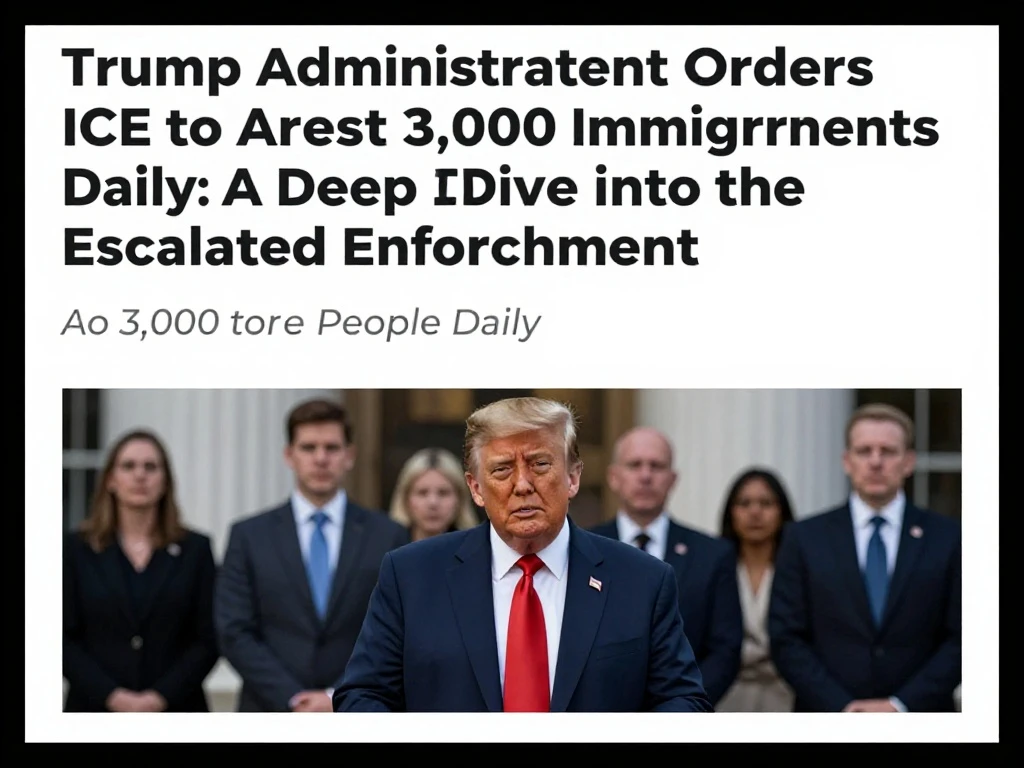
The Trump administration has issued a directive requiring Immigration and Customs Enforcement (ICE) to arrest 3,000 undocumented immigrants per day, effective May 21, 2025. This mandate triples previous enforcement levels and marks a significant shift from border-focused operations to interior enforcement, targeting individuals already residing in communities across the United States. While a Homeland Security spokesperson insisted there are “no quotas on arrests,” department leadership has defended the increased volume as a statutory obligation. The move has sparked intense debate over its feasibility and humanitarian implications.nnTo meet the new target, ICE has undergone major leadership restructuring, with senior officials replaced to align with the administration’s enforcement priorities. Additionally, protections for sensitive locations such as schools and churches have been removed, allowing arrests in these previously off-limits areas. This policy change has raised concerns among advocacy groups about the impact on vulnerable populations and community trust. Congress has proposed $147 billion over 10 years to fund expanded ICE enforcement and detention efforts, but the logistical strain is already evident. The sheer volume of detainees is placing significant pressure on federal holding infrastructure, prompting emergency contracting for additional detention space.nnDespite the new goal, Trump administration officials have maintained that ICE agents have no quotas, creating a confusing narrative. Key takeaways from this policy include: ICE must arrest 3,000 undocumented migrants daily starting May 21, 2025, tripling prior enforcement levels; protections for sensitive locations have been removed; and Congress proposes $147 billion over 10 years to fund expanded enforcement and detention. The administration argues that the increased arrests are necessary to enforce immigration laws, but critics contend that such aggressive targets could lead to due process violations and racial profiling.nnThe transformation of the immigration enforcement landscape under the Trump administration represents a major escalation. By shifting focus to interior arrests, ICE is now targeting people already living in communities, rather than primarily stopping individuals at the border. This approach has far-reaching consequences for immigrant communities and the agencies tasked with carrying out these orders. As the policy takes effect, its implementation will be closely watched, with potential legal challenges and logistical hurdles ahead. The coming months will reveal

 Shimanta Das