Supreme Court Weighs Landmark Climate Case as Big Oil Fights Accountability
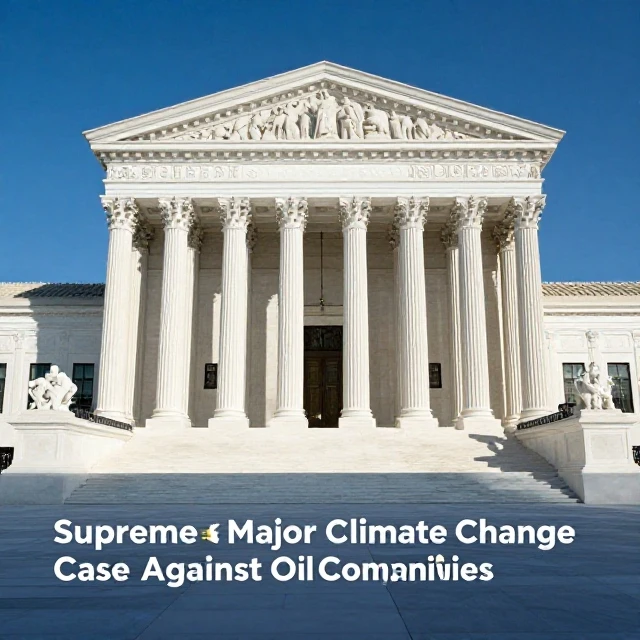
The US Supreme Court opened its new nine-month term on Monday by hearing nearly two hours of arguments in a pivotal climate change case that could determine whether local governments can hold major oil companies accountable for their role in global warming. The case, brought by Boulder, Colorado, along with Boulder County, seeks to hold Suncor and ExxonMobil liable for climate-related damages under state law. It marks the first major case about planet-warming pollution the court has debated in at least 15 years, and it comes as climate change remains one of the most significant issues facing the nation and the world.
At the heart of the dispute is whether federal law preempts Boulder’s claims from proceeding in state court. The fossil fuel companies argue that the federal Clean Air Act preempts the case, even though the law explicitly states that “air pollution control at its source is the primary responsibility of states and local governments.” They further assert that federal common law remains in effect and is embedded in the “structure of the Constitution,” despite the Clean Air Act’s grant of primary jurisdiction over local air pollution to the states. Sai Prakash, a law professor at the University of Virginia who filed a friend-of-the-court brief backing Suncor and Exxon, summarized the companies’ concern: “Essentially Boulder claims that Colorado can reach around the United States, the entirety of the United States, and to my mind, regulate production everywhere by attaching liability to it.”
The court’s 6-3 conservative majority may be uncomfortable allowing state juries to decide such pressing national issues, raising questions about whether local governments can pursue oil companies for contributing to climate change. The term also features other major cases, including a challenge to bans on AR-15 semiautomatic rifles and two cases involving the Trump administration’s hard-line immigration policies. With the court’s conservative supermajority poised to weigh in, the outcome of the climate case could have far-reaching implications for how—and where—climate accountability lawsuits proceed across the country.

 Shimanta Das