Sanders Urges Trump to Negotiate AI Treaty as Industry Leaders Sound Alarm
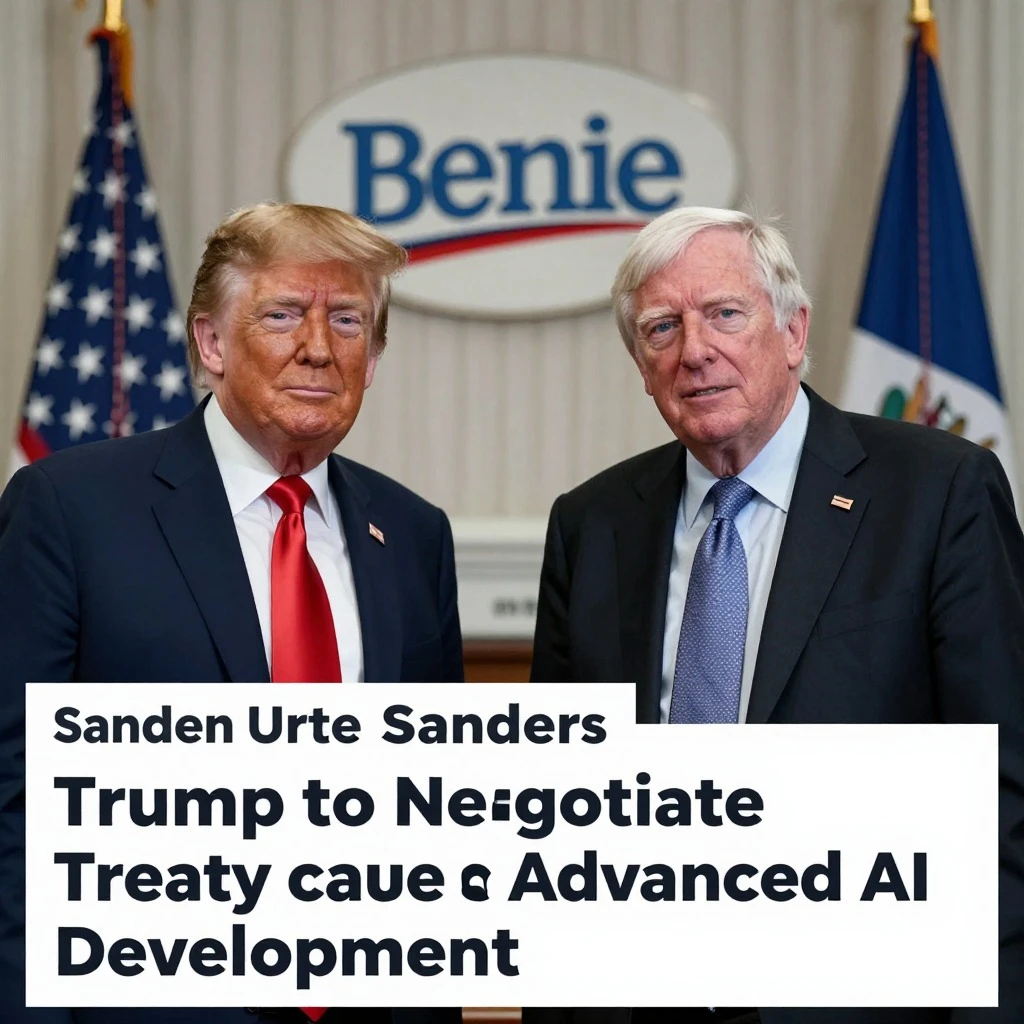
Senator Bernie Sanders has called on former President Donald Trump to negotiate an international treaty to pause advanced AI development, citing existential risks. This push comes amid growing concerns from AI leaders themselves. In recent weeks, the topic has been a primary focus of discussions at OpenAI, according to CEO Sam Altman, who endorsed the views of Anthropic CEO Dario Amodei. Amodei warned of threats including control of AI systems, cyber attacks, bioterrorism, and significant economic disruption. He urged that “we must slow the pace at which we improve the capabilities of AI models,” while acknowledging that progress would still remain rapid.
The urgency is underscored by a fierce technological race. While major US-based tech companies—including OpenAI, Anthropic, Meta, Google, and others—race to unlock AI’s potential, Chinese companies and researchers are seen as the main competition. This dynamic adds complexity to calls for a pause, as any unilateral slowdown could cede strategic advantage. Yet Amodei and others argue that the risks are too great to ignore. Altman’s endorsement signals that even leading AI developers recognize the need for caution.
Elon Musk, a longtime AI alarmist, reacted by saying he has been “sounding the alarm on AI for a long time.” He recalled his 2023 post warning that artificial general intelligence (AGI) poses a risk “significantly higher than nuclear weapons.” Musk’s stance aligns with Sanders’ call for a treaty, highlighting a rare bipartisan concern. The debate now centers on whether nations can cooperate to pause advanced AI before it’s too late, balancing innovation with safety.
As the 2024 election approaches, pressure mounts on leaders like Trump to address AI governance. Sanders’ appeal reflects a broader push for international cooperation, but the path to a treaty remains fraught with geopolitical tensions. With industry leaders and policymakers increasingly vocal, the question is no longer whether to act, but how quickly and collectively.

 Shimanta Das