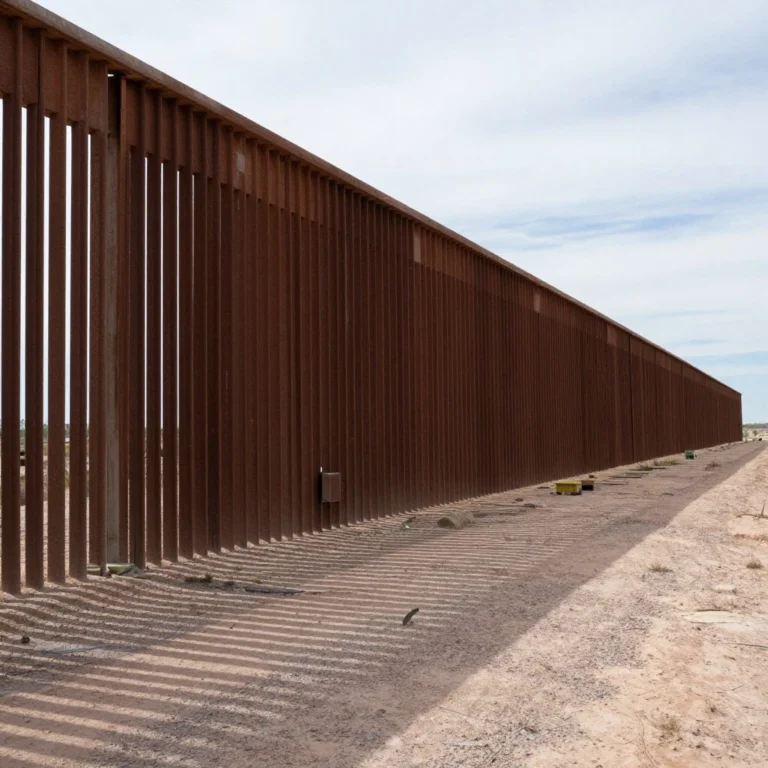
The Trump administration is pushing forward with border wall construction in Texas, particularly in the Big Bend region, where U.S. Customs and Border Protection (CBP) is negotiating with landowners to build a 30-foot steel bollard wall. To avoid eminent domain disputes, CBP has offered signing bonuses to landowners for permission to erect the barrier. However, more than half of the affected landowners have joined a coalition to challenge the federal government’s eminent domain claims, signaling a growing resistance to the project.
The Big Bend area has remained largely unwalled due to its natural barriers—towering cliffs, desert terrain, and a lack of towns on the Mexican side—which already deter unlawful migration. Unauthorized crossings have plummeted further since Trump returned to office and intensified border enforcement. Despite this, CBP’s October 6 status report indicates that the southern border now has 669 miles of primary barrier and 65 miles of secondary barrier, with 15 miles of new primary barrier built in areas that previously had none. Critics argue that isolated fencing will become the norm if construction proceeds, according to Clara Bensen, communications director for No Big Bend Wall.
Opposition extends beyond landowners. Native American groups contend that the wall could inhibit their religious practices and damage sacred sites, while environmentalists warn of potential flooding and disruption to wildlife migration. The construction, though not made of solid concrete, uses significant amounts of concrete, according to CBP. Funding remains controversial: despite Trump’s 2016 campaign promise to make Mexico pay, the U.S. government has spent billions to expand and rebuild the wall. As the administration presses on, the clash between border security priorities and local and environmental concerns continues to intensify.
 Shimanta Das