U.S.-France Tensions Grow After AUKUS Submarine Deal Excludes France
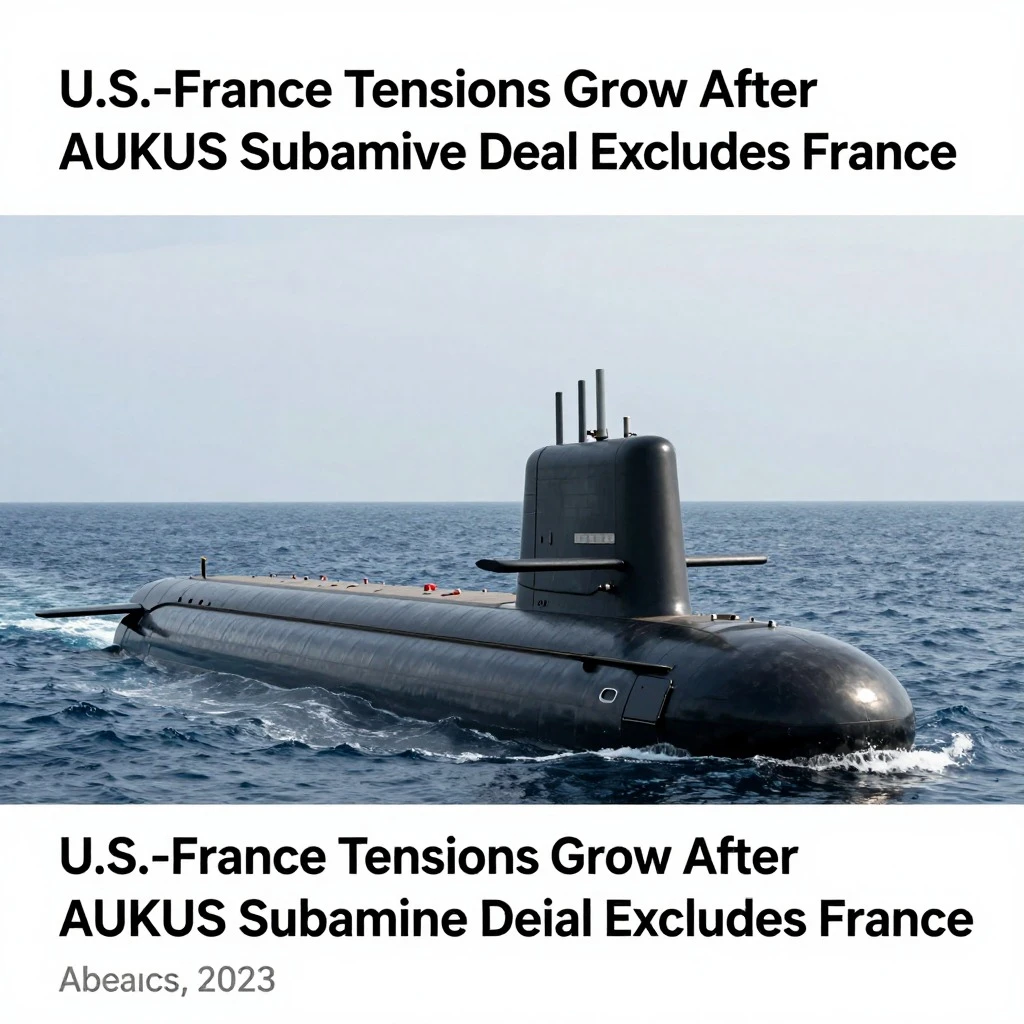
The recent AUKUS security pact between the United States, United Kingdom, and Australia has sparked a diplomatic crisis with France, after Australia abruptly canceled a 90 billion Australian dollar ($66 billion) submarine contract with French majority state-owned Naval Group. The deal, signed in 2016 to build 12 conventional diesel-electric submarines, was scrapped in favor of a U.S.-U.K. partnership to provide nuclear-powered submarines. France’s ambassador to Australia described the move as a “huge mistake,” reflecting the depth of Paris’s outrage. The timing was particularly sensitive, coming on “the eve of the publication of the EU strategy in the Indo-Pacific, and as Paris has risen as the main EU strategic actor in the region,” noted Benjamin Haddad, director of the Europe Center at the Atlantic Council.
The AUKUS deal is a key component of President Biden’s broader China strategy, which also includes the Quad—a grouping of the U.S., Japan, India, and Australia. This strategy builds on the intellectual foundation laid by Kurt Campbell, a major architect of the approach, in his 2016 book “The Pivot: The Future of American Statecraft in Asia,” which was advertised as an account of “a necessary course correction for American diplomacy, commercial engagement and military innovations.” Campbell’s vision emphasized strengthening alliances and partnerships in the Indo-Pacific to counter China’s rising influence. However, the execution of the AUKUS deal has inadvertently strained ties with a key NATO ally and undermined France’s role in the region.
The fallout extends beyond bilateral relations. French officials have accused the U.S. of duplicity, and the incident has reignited calls for European strategic autonomy. The EU’s Indo-Pacific strategy, unveiled shortly after the AUKUS announcement, aims to bolster Europe’s presence in the region, but France’s exclusion from the submarine deal has complicated that effort. Australian Defense Minister Peter Dreyfus acknowledged the concern, stating, “The impact on our relationship with France is a concern, particularly as a country with important interests in our region.” The crisis
 Shimanta Das