
Humpback Whales in U.S. News: Recovery, Populations, and Rare Encounters
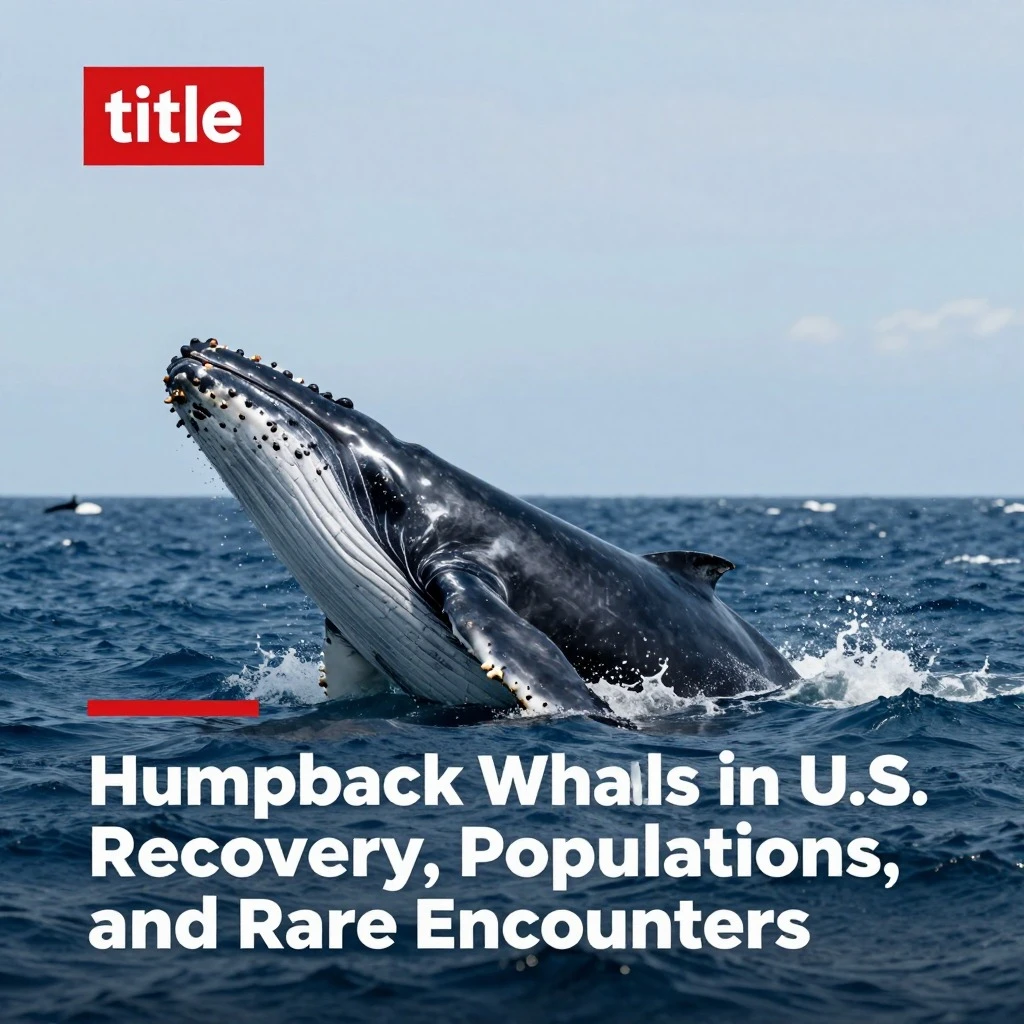
Humpback whales have become a symbol of marine conservation success in the United States, thanks to the International Whaling Commission’s final whaling moratorium on commercial harvest, in effect since 1985. This global ban played a major role in the recovery of humpback populations, allowing them to rebound from the brink of extinction. Today, these majestic creatures are frequently spotted in U.S. waters, from the Pacific coast to the Atlantic, capturing public attention and making headlines.
In the North Pacific, at least four distinct humpback whale populations occur, each with unique breeding and feeding grounds. The Mexico population breeds along the Pacific coast of Mexico and the Revillagigedo Islands, transits the Baja California Peninsula, and feeds from California to the Aleutian Islands. The Central America population breeds off Costa Rica, Panama, and other Central American coasts, then feeds off the U.S. West Coast and southern British Columbia. The Hawai‘i population breeds in the Hawaiian Islands and feeds across the North Pacific, including the Aleutian Islands, Bering Sea, and Gulf of Alaska. The Western North Pacific population breeds near Japan, the Philippines, and the Mariana Archipelago, and feeds in the northern Pacific. In the North Atlantic, two populations feed from the Gulf of Maine to Norway. While calves do not maintain long-term associations with their mothers, they are more likely to return to the same feeding and breeding areas as their mothers, ensuring cultural continuity.
Recent news highlights the growing presence of humpbacks in U.S. waters. In November 2025, rare footage captured a sucker fish catching a free ride on a humpback whale, though the fish’s journey after leaving the whale remains a mystery. Another heartwarming video showed a whale swimming alongside a calf, resting next to it, maintaining eye contact, touching the calf, and moving a pectoral fin over its body. Observers in regions like the New York Bight—the marine area off New York City, Long Island, and New Jersey—have noted that humpbacks were once mainly migratory visitors but are now seen

 Shimanta Das